Showing posts with label Socialization. Show all posts

Wednesday, October 1, 2014

One Behavior You Must Teach Your Puppy?

To Sit?  That is a nice default behavior, but not the most important one to teach.

To Come?  Great behavior to have consistently for sure!

To Leave it?  Awesome behavior to have, great on walks both on and off leash!
hand feeding for good behavior

How about not to bite human flesh?  Sounds pretty important to me! Bite inhibition is the technical term for a dogs ability to control the pressure they use when biting. If you could only teach your puppy or new rescue dog one behavior, please remember to teach him a soft mouth -- aka bite inhibition.

How?  By giving your dog appropriate feedback.  Over several days with the following positive techniques, your puppy will learn this life saving skill.

1. Hand feeding daily meals, release the food when your puppy is gentle or licks.  If you feel teeth, wait until he softens, then reward.
Example:  Say your pups name and when he look at you, offer a piece of food.  Say your pups name and "come" offer a piece of food as a reward.  Reward your puppy for coming and sitting 10 times per meal and you will have a solid sit and a softer mouth!


Playing Tug can teach a soft mouth
2. Play tug, using the rules of tug you can quickly help your puppy learn that when you feel teeth on your skin, playing stops.  Remember, do not drop the toy or you could teach your puppy that biting is how they do get the toy.  Instead, ask for a sit to begin the game, then say "take it" and play "tug" keeping the toy low to the ground.  Next, put a treat to the pups nose and say "leave it" and
exchange with the food while putting the toy behind your back.  Repeat, sit, take it, tug, leave it.


flat pan cake hands are non threatening
3. Body handling your puppy with a soft, flat gentle hand.  If your puppy bites your hand, then let your hand go limp, dead like, and wait until the puppy removes his mouth from your hand.  Repeat slowly and gently as your pup learns that hands predict good gentle scratches and massaging.  Some puppies respond if you scream, but some thing you are simply playing, so this feedback may help and it may not as all puppies are different.


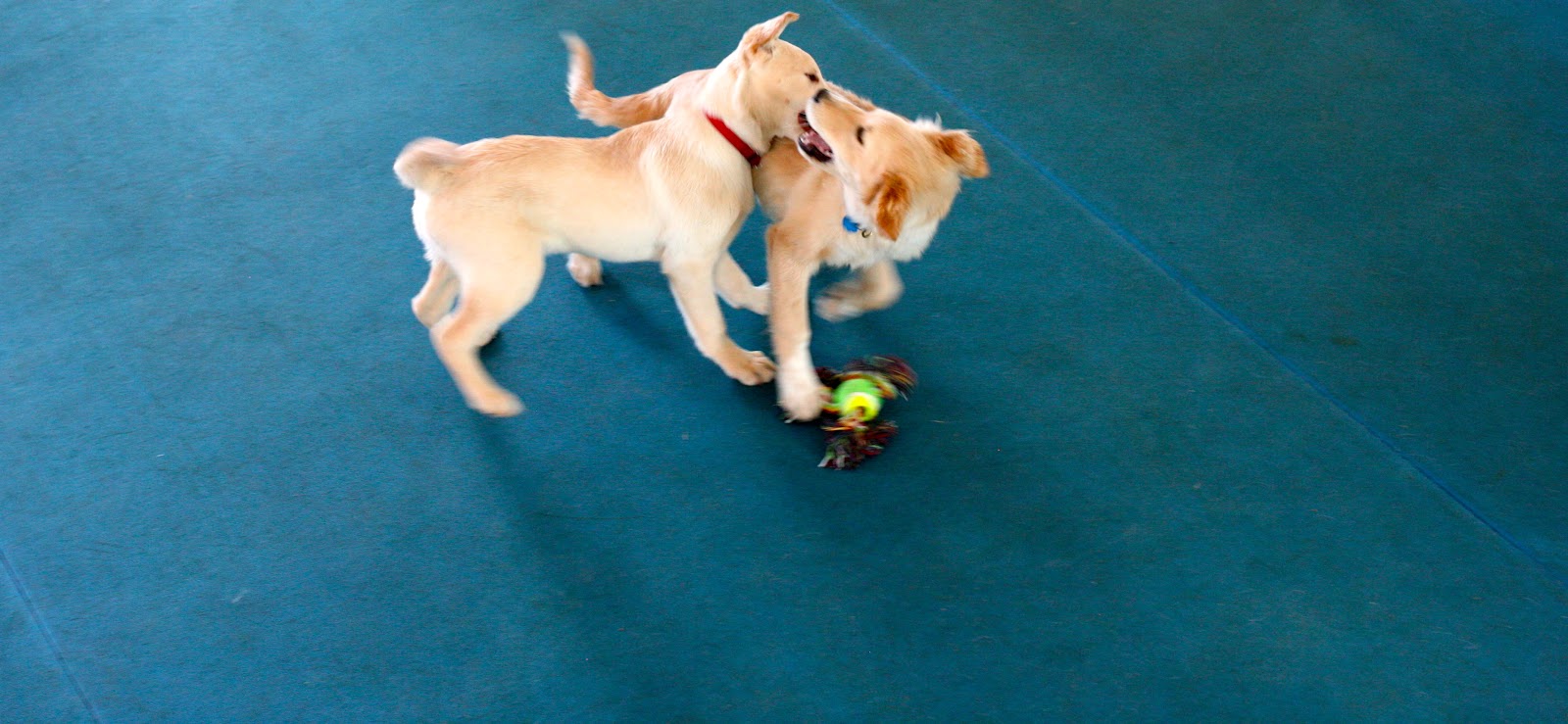
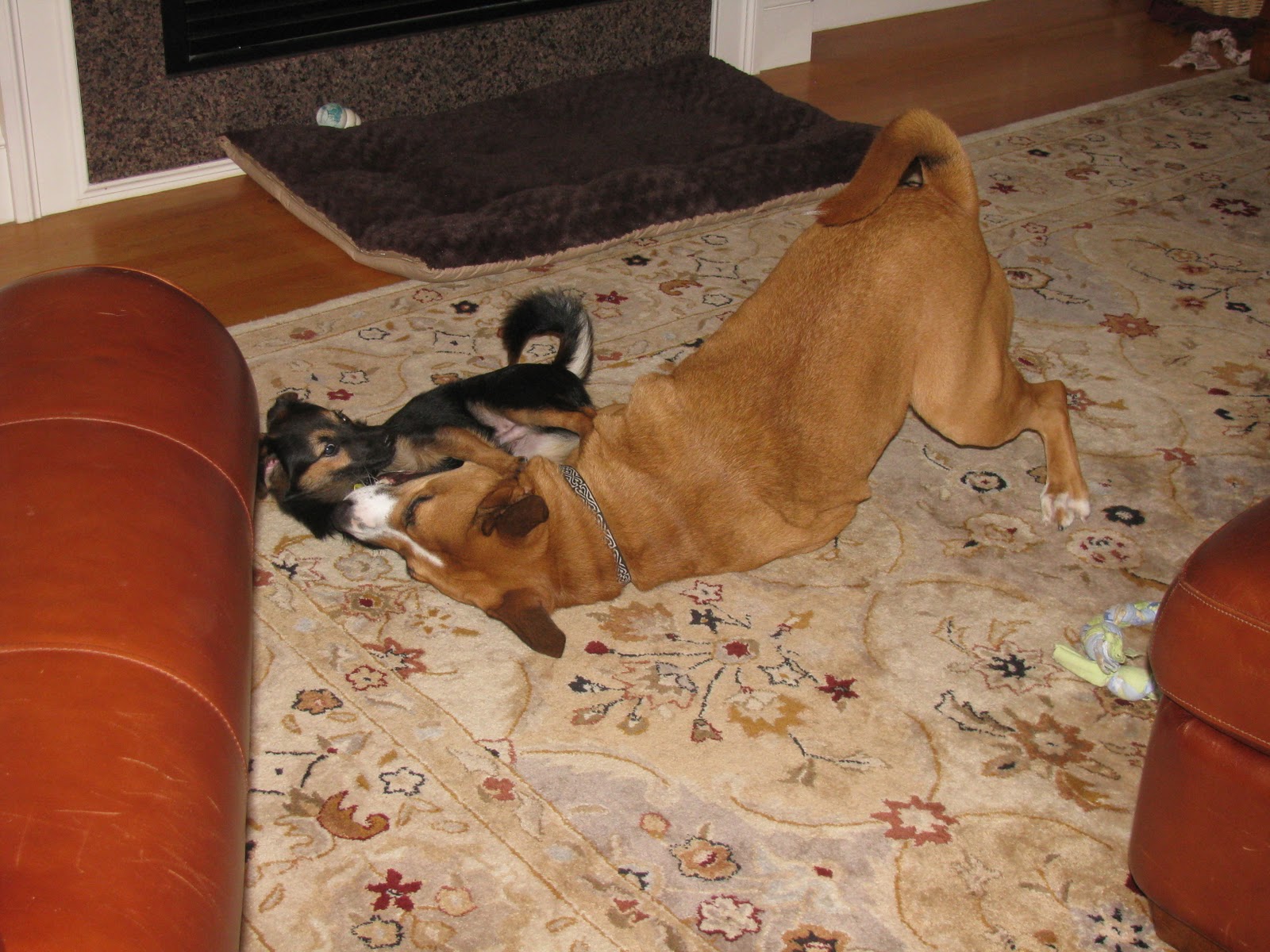
4. Allowing your puppy playtime with another friendly dog or in a puppy group.  Playing with other pups will surely help your puppy learn
Puppy play group
not to bite too hard, many pups learn to use a soft mouth when playing with their mother, however some pups miss out on this lesson and will therefore learn it while playing with other puppies and of course playing with you.

Teaching your puppy a soft mouth or  good bite inhibition is the ONE most important behavior you need to teach.  Remember, your pup will not stop using his mouth on you and your clothes in 1 day as he has been using it with his siblings for 8 weeks,  be patient and give your puppy the feedback he so needs to be able to live with humans.

What should you not do?  Scare your puppy or teach him that human hands are to be feared, as this tactic will most likely make him want to bite hands more.  Why?  Science has taught us that dogs who are handled in a physical or rough manner are more often to bite later in life.  Science has also taught us that aggression breeds more aggression.

If you do not want your puppy to use his mouth to resolve conflict, then please do not use your hands to resolve conflict.  Science has taught us that rough hands on a pup, will create unwanted behavior changes as the pup matures.  Example: Submissive peeing, over the top wiggly greetings, worse mouthy behavior, biting later as an adolescent dog, growly and avoidance behaviors.

For a reference on teaching a soft mouth, refer to Sophia Yin's Low Stress Handling techniques
Dr. Sophia Yin, Low Stress Handling.  Although Sophia passed away just yesterday, she will always be a source to reference because she educated those of us in the Pet Industry that the emotional well being of the animal is essential to avoiding unwanted behavior changes.


Sunday, January 26, 2014

A growl is better than a bite!

I am often called to a home where a dog has nipped or bitten a child.  I realize many think that a dog should NEVER use his teeth to resolve conflict with a human, and I agree in a perfect world, humans should NEVER hit a dog with their hand to resolve conflict either.

When there is a language barrier between two species, communication is often misunderstood and
Socializing pups with calm children is essential.
conflict can easily follow.  A three year old running at a dog with an object in his hand can be scary. How many times does your dog have to get up and move away to keep himself out of trouble before someone slows down the noisy moving child?

If by noon, the dog has looked away three times, offered a few tongue flicks, turned his head away five times and gotten up from his resting place four times to avoid conflict with the little tornado, then on the twelth time he may give a growl.  I can not tell you how tolerant a dog should be, but I can tell you that they all have a threshold or a breaking point just like we humans do.  I hope you recognize the growl as a low level warning that your dog is asking for space, and please do NOT punish the warning growl.  In the future, I guarantee you would prefer your dog growl as a distance cue rather than use his teeth!

What other pet animal is so tolerant of children?  Bunnies will squeek a warning and nip, cats will hiss and claw out, hamsters have also learned that nipping gets them safely back in their cage.

I like this child, she is not moving and she feeds me!
I am happy to report that many moms have asked me to speak to their children as a way to educate the child on how the dog is "feeling" when they are near.  While some dogs enjoy having kids around, clearly others do not. Our responsibility is to step in and help our dogs feel safe so they do not have to resolve the conflict alone.

If you live or work with children, it is especially helpful for you to know your dogs signals that he or she may be feeling worried. That way you can intervene so that your dog never has to growl or nip, or reach his or her threshold point.

I am certain that the dogs in the above photo, who are being fed by the young girl in the stroller, are feeling pretty good being fed by a child that is not running around.  However, if she were to get out of the stroller and run at these dogs, they would not feel the same way and one of them would need to be removed to keep him from hitting his threshold.  With lots of positive associations and yummy treats, both these dogs can learn to enjoy children running around them.

So please, if you observe a dog feeling worried about a child moving nearby, remove either the child or the dog so that the dog is feeling safe and the dog does not get into trouble.  An ounce of knowledge can go along way to helping both dogs and children grow up together in a positive way.

Saturday, January 11, 2014

New Year! New Puppy?

If you are enjoying the beginning of 2014 with a soft cuddly new puppy, then congratulations!!  As the owner of a new puppy, you have some responsibility to the puppy and to those who come in contact with your new puppy.  While you must certainly be enjoying the new puppy smells, sounds and soft fur, you may also be a bit tired from late night potty trips outside, managing all the winter gloves and hats that puppies love to chew on,  and you may possibly have a few scratches from your pups needle sharp teeth.

First, it is very normal for your puppy to mouth you as that is how dogs gain information about things near them.  If you have ever watched two dogs play, they often use their mouth during the interaction.  The primary puppy behaviors you need to teach your puppy? 1.  Not to bite humans, called "bite inhibition" 2. Potty training, for your own sanity.  3. Calm behaviors, as everyone loves a pup with good emotional control  4. Socialization to a variety of places, people and dogs in a positive way. Finally, prevention of guarding and becoming overly mouthy, as these two behaviors can lead to an unwanted bite.

There are numerous Certified Pet Dog Trainers who can help you teach your pup appropriate behavior to succeed in a human home.  Using Positive Reinforcement Communication and lots of patience, you will eventually have a wonderful family dog.  To find a Certified Pet Dog Trainer in your area, investigate this link: CCPDT Certification for Pet Dog Trainers

 I have 3 basic rules that I use often with new puppy owners:
Socialized dogs, enjoy life enrichment activities
1. Manage your pup so it is not practicing any unwanted behaviors. For example, use a crate or x-pen to contain your pup if you can not watch him.  This is not only for his safety, but so he does not learn how good it is to chew on your favorite boots.
2. Reward your dog all day long for appropriate behaviors.  Example, if you are going to let your pup out of his crate, then put your hand on the latch, if your puppy is calm open the crate and reward with freedom.   If however he climbs on the door and barks at you. Take your hand off the latch and wait.  When your puppy is calm or sitting, then you can open the door, if he tries to bolt out, close the door quickly, and wait until he sits or is calm, then reward with freedom!
3. Show your puppy what it is you prefer he do and reinforce it with something.  For example, if your puppy bites on your hand, remove your hand and quickly replace it with a toy.  Move the toy around on the floor and praise your puppy when he chases, and mouths the toy.  If he bites your hand or arm let him know it hurts and replace it with a toy.

Keep in mind your puppy has been using his mouth to play with his siblings for weeks, so he is conditioned to do so.  It is your job to help him learn good bite inhibition and socialize him well with new places, people and allow him to play with other puppies to help him learn good social skills.

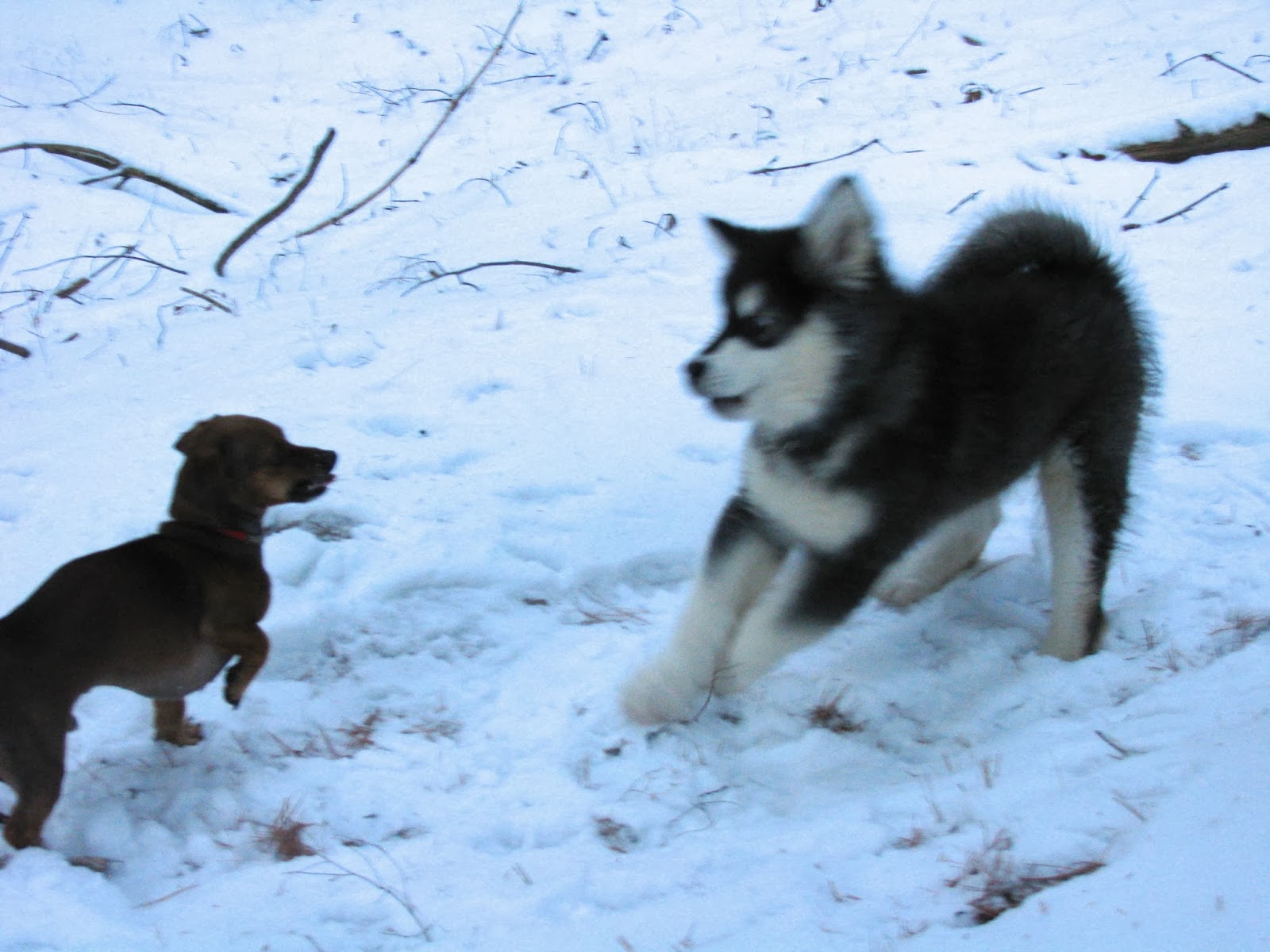
In this photo to the right, the 13 week old Malamute started to bark at the 4 year old Dachshund.  This Dachshund is not happy about having to potty in 10 degree weather and so is not interested in playing.  He signals this to the pup by closing his mouth, freezing his body, making direct eye contact and then begins to give a low growl directed at the puppy.  The young pup quickly began to back away and go look for another playmate.  Helping this Malamute have good social skills is important as we do not want him to grow in to a large bully.

To ensure your puppies behavior is shaped to be a calm family pet, consider a puppy socialization class taught by a professional!  CBC Puppy Class Schedule

Sunday, December 29, 2013

Once a guarder, always a guarder?

Go away!

Zeke, my foster dachshund, was surrendered because he continually fought with another dog in his home.  This was particularly sad because he was given up by the family who adopted him as a pup. It was the only home Zeke was familiar with.  On the other hand, if Zeke was fighting with another dog in the home, did he feel safe in that home?  Why did he constantly want on his owners lap?  Was he guarding her, or was it that he felt safest when near her?  Why did he guard his crate?  Again, was it his or was it that he felt safe there? What made this behavior rewarding to Zeke?

I am pleased to inform you that after less than 3 weeks, Zeke has developed a trusting relationship with my three dogs.  Why is that important?  Because many dogs that guard are also fearful and defensive.  Once I reduced his fear, he now moves through the house with bones and toys in each room, and he no longer chases my dogs away from them or even gives them the "look".  They have walked past toys and bones so many times (and there are plenty to go around!), so guarding is not rewarding anymore.

I am warning you!

That does not mean he may not fall into old habits in his new home, but it does mean that I personally believe Zeke's underlying habitual guarding behavior stems from very poor social skills with both people and dogs.  Developing a trusting relationship with dogs in the home, and devaluing the objects he found high value, have been a successful plan for Zeke.


When Zeke, the Dachshund, would show his teeth at my dogs to gain access to more food I was holding, I walked him away and gave his share to my dogs.  I waited about 2 minutes and repeated this exercise of feeding everyone some chicken.  When Zeke focused on me and ignored my dogs, showing no distance cues at them, I rewarded him with chicken. Hence, he learned good social skills always gets rewarded in my home.

Monday, November 25, 2013

Pets for Vets Program Launched here in Portland, Maine

I am happy to announce that Portland, Maine has an official Chapter for the Pets for Vets Program and I am the official trainer of the canines for this wonderful program.  I will be assessing, training and matching dogs with Veterans in need of a companion dog.

Tom Targett, Chapter Director is to be recognized and thanked for his dedication in getting this Portland Chapter off and running.  Tom is an ideal Director as a returning Veteran himself and his understanding and love of dogs.

Our mission at the Pets for Vets program is to help support veterans while providing a second chance for shelter pets by rescuing, training and pairing them with veterans right here in our community who could benefit from a companion animal.

I am pleased to inform you that we will be introducing our first match early in December!  I am not sure who is more excited about this upcoming match?  Tom, my self or our Veteran, we are all simply joyful to be a part of this first match!

Each Monday from November 18 to December 10, from 6 – 8 p.m. Pets for Vets, Maine Chapter will be near the Santa photo area at the Maine Mall in Portland.

For further information about our new Portland, Maine Chapter, contact:
Thomas Targett -  tomt521@aol.com
http://pets-for-vets.com/category/northeast/portlandme/pme-news/

Saturday, April 27, 2013

Puppy Socialization Classes

New puppy owner's may be unaware of the importance of Puppy Socialization Class.  Puppies have a "Critical Period" in which they should be exposed to a variety of environments, noises, smells, strangers and, of course, friendly dogs.  Without this process the puppy will grow up to be limited to where he can go and who he can be around.

Inadequate socialization with new stimuli does not only make the dogs life much less enjoyable, as confinement to the home or yard is boring and incredibly frustrating. Dogs who are poorly socialized also make life much more difficult for their owner.

Maizy, a foster scottie, was highly territorial and fearful of dogs.  She learned to meet and greet appropriately and made several friends while she was with me.  The approach used was called BAT, or Behavior Adjustment Training, which is a slow process of helping a dog obtain much needed information from a new dog in a way the dog can process it comfortably.

With BAT, older dogs can be socialized. But, keep in mind, it is a much slower process and becomes frustrating for many owners as you need to go at the dogs pace.

So, please set yourself and your new puppy up for success and join a Socialization Class by a Certified Pet Dog Trainer (CPDT). I recommend one where you stay in class with your puppy, and learn what play is appropriate and what is considered too much for your pup.  The AKC S.T.A.R. puppy class is a great way to get your pup started on being a canine good citizen and avoid aggression and other unwanted behaviors. I think we can all agree, that a trained, social dog makes a wonderful family pet, and unsocialized dogs that exhibit fear and aggression are often given up or euthanized -- a result that really could be prevented with proper socialization as a puppy.

Sunday, April 7, 2013

Positively Rewarding

While working with a private client and her pup this week, she repeated herself many times by saying, "she is so smart", "I had no idea my dog was so smart!"  The funny thing is, I hear this from many clients when teaching their dog a new behavior.

When pet owners learn to teach their dog new behaviors using positive reinforcement, their reaction is always, always, the same: "I had no idea how smart my dog was!"  The only thing they did
differently was quickly rewarded the dog when it made the right choice, then repeated the reward when the dog did the correct behavior again.  We were able to teach her puppy to touch her hand with its nose and to lie down, in a matter of minutes using the pups mid-day meal.

Seeing how happy this owner was, and how quickly she became more connected to her pup, reminded me once again how effective positive reinforcement training is -- both for the dog and owner!

Wednesday, February 27, 2013

Changing Behavior

When changing your dogs behavior or habits it is best to go slow and keep it simple.  Changing habits takes time and while the process may seem overwhelming at times, remember small successes are a big deal!
Steps to changing your dogs behavior: 
1. Make a plan, put it in writing, including specific detailed goals
2. Identify your dogs triggers and the alternative behavior you desire
3. Focus on asking your dog to do the alternative behavior or habit every single time the trigger happens at a distance, for several weeks.
4. Reward your dog generously for offering the alternative behavior
several reactive dogs changing their behavior
  • Reward even if the dog attempts the behavior.
  • Reward even if the dog takes one step or turns his head to consider the option of complying.
  • Avoid only rewarding when the dog completes the new behavior, but do reward the dog for even the slightest attempt of any new behavior.  This is called a "choice point",  it is to your advantage to reward any attempt in making the correct choice!  
  • Avoid this mistake:  if your dog is afraid of the mail carrier, then begin with all adults but avoid the mail carrier for now.  When your expectations are not real, you will be frustrated. Setting your dog up for success is best done when the triggers are very low and far away, this is a good plan for getting an alternative behavior started.
  • Even if the dog does it for one second!  When you begin to reward slight offerings of new behavior, your dog will more likely want to continue to play this new game!
Take it slow, breathe,  and relax as your dog is depending on you!  Setting your dog up for success also implies training when YOU are in a calm mental state.  If it helps, think of the many things your dog does right and build one small behavior at a time!

Next, I will offer specific games to play in specific locations to help you progress.


Friday, November 16, 2012

Puppy Play

Baden gaining confidence in play.
While many of us watch dogs play, we often wonder if the dogs are having as much fun as we think.

I believe it is important that both dogs are chasing, being chased and sharing time on top equally.  If not, stepping in and creating pauses in the play will be beneficial to the less experienced dog.

When a play session is one sided, meaning one dog is constantly on top of the other, this is not equal play.  While you may not hear any growling, one dog may just be coping and not enjoying the play.

Try taking the collar or harness of the dog on top and gently pull him away.  Now, see what happens?  Does the dog on the bottom run away in need of a break?  Does he lunge or run back to the dog on top as if to say "come on, let's play"!  This simple test will give you confirmation that everyone is feeling okay about the interaction.

Baden a young pup playing with Pablo
Interrupting the play with short pauses will allow the dogs to lower their arousal and have a brief conversation about their intentions.  Watch as they look at each other or away, kiss faces, move closer or farther away.

In the photo to the right, Brady the 5 month old pup was a bit worried to play with a bigger adult dog.  Pablo began to "handicap" himself getting lower and lower to encourage Baden to play with him.  I asked Pablo to take many breaks as I could tell his type of play was a bit over whelming for Baden.

Before long these two were in constant motion and I was reassured each time I removed either dog, the other one came at us wanting more.  Knowing the play was fun for both dogs was a win win!

Monday, November 5, 2012

Canine Body Language Seminar


Mia greeting me with her back for safety.
Thank you to everyone who attended our Canine Body Language Seminar held at Poetic Gold Farm in Falmouth this past Sunday!  I believe, from all the positive feedback I have received, we accomplished our goal of helping everyone see that our dogs really do speak with their body movements.  When we take time to observe our dogs stance, their weight distribution, what their ears, eyes, tail, mouth, brows and tongue,  are doing as well as their over all body firmness, we can learn a great deal about our dogs emotional state.  With just a bit of practice we can understand what our dog is feeling given the situation they are in and how to help them if they are fearful or stressed.  As you can see in the above photo, Mia was not comfortable greeting me for the first time facing me, instead, each time turned and gave me her back, with ears down and back, tongue flicking up and out.  She clearly has a bit of hesitation when greeting someone new, but she did quickly warm up and roll on the ground in a relaxed goofy manner.

We certainly all agreed that when it comes to a dog greeting a strange person or new dog, the dog always has an opinion.  Rather than asking "can our dogs meet", we should all be asking "do our dog's want to meet" the strange dog or person.

Pablo is fearful of people and has begun to ground sniff.
Knowing how your dog is feeling in different situations will help you set him up for success.  Note in this photo, Pablo is sniffing the ground, he is uncomfortable with all the humans looking at him and has resorted to ground sniffing as it is comforting to him.  Knowing he was stressed I had my daughter play a game of "find it",  he happily ate the treats and kept a safe distance from the observers.

Bella is avoiding Pablo by sniffing in the grass.


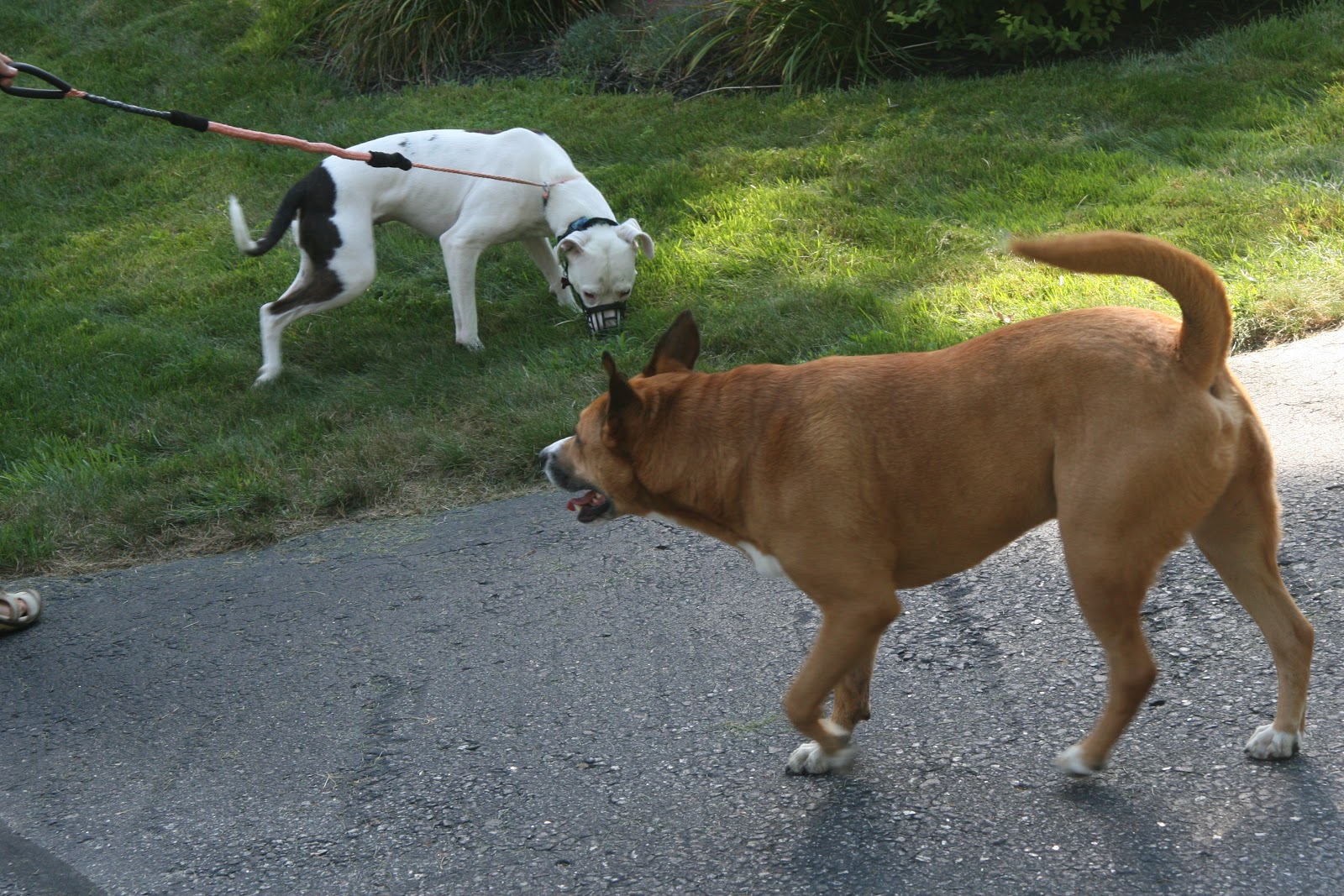
As you can see from this photo taken a few weeks earlier, these two dogs having just met are not comfortable entering each other's space and therefore are demonstrating some avoidance.  Note Bella sniffing the grass and Pablo has a high tail and fairly stiff gate. This is the dogs way of keeping themselves safe, as neither dog invited the other dog into a friendly greeting, rather are clearly ignoring each other.
Bella greeting Buddy in a soft manner.


Here, you can clearly see how floppy Bella's body is in greeting Buddy.  Buddy began inviting her into his space by getting low and play bowing numerous times just after walking together for about 20 minutes. Their body's became soft, tails flat, joints soft with lots of movement, eyes were soft with no direct staring.   These two dogs played very well in a 50-50 manner having just met 30 minutes ago.

In summary, keep in mind that your dog will have an opinion about what he wants or needs to feel safe when faced with a new person, dog or environment.  Take it slow,  and practice understanding your dog when he is happy and relaxed and also when he is stressed or anxious.  Knowing how your dog is feeling will help you understand how to help him through situations when he needs you most!

Saturday, October 27, 2012

Dog Bites Mail Carrier

The human canine bond is incredibly special, and as canine lovers we bend all the rules to keep our own dog safe and out of trouble.  However, sometimes our dogs use their Hind Brain which controls their reactive, reflexive and poor impulse control which can get them into trouble.  If your dog is a thinking dog he is using his Front Brain more often and is more responsive, more conscious and has better impulse control.

Do you really know who your dog is?
Starting pups in classes creates a thinking dog.
If today, you opened your front door and are startled to see the mail carrier, will your dog bark, lunge, attack or wiggle?  Do you know why he behaves this way?  Are you comfortable helping him behave differently?

Helping your dog be a thinking dog can be a real lifestyle change.  You can start by washing your dogs bowl and putting it in storage.  Hand feeding your dog his meals as rewards for good behavior each day for behaviors both in and outside the home will help your dog be thinking more often.  Enroll your dog in private training lessons, basic obedience, rally, agility or tracking class to help him become a thinking dog rather than a reactive dog.  If you are not sure what your dog can handle, get a professional evaluation to set you and your dog up for success.  Helping your dog see a stimuli, including the mail carrier and think before he reacts is as rewarding for you as it is the dog.

Setting your dog up for success and helping him be a thinking dog instead of a reacting dog takes patience, good timing and daily practice.  When you see your dog go through a "switch over" and begin using his thinking skills when he sees certain stimuli, then you will know who your dog is becoming!


Wednesday, September 26, 2012

Soft Mouth

I often visit families with a puppy that is biting much too hard.  Puppies use their mouths to play, explore, taste and chew, so it is important that we teach them to use a soft mouth when they touch our human skin.  Giving your puppy feedback is essential, so tell your puppy when it hurts, "ouch!", get up and walk away slowly.  Return and softly handle your pup, when his mouth is soft, reward him with verbal calm praise.  Too much excitement can encourage the pup to play harder.

How about an older dog, can you teach an older dog a soft mouth? Absolutely!  For example, hold the treat or even kibble under your thumb and offer it to your dog, if you feel teeth, just wait, when your dog licks the treat, release it as a reward.  Repeat several times, rewarding for a soft mouth and not rewarding when you feel teeth.

Remy came to us as a rescue with a hard mouth, he learned to be gentle and also drop the toy for us to toss it again. Here he is playing a game of tug, using good manners!
Allowing your pup to play with other pups in a socialization class is a great way to teach a soft mouth.  Notice that I said play with other pups, not play with two and three year old adolescent dogs at the dog park as their mouths are unknown and can teach your pup a much harder mouth.

Playing tug is a great way to teach a puppy a soft mouth, if you feel teeth during play, "Ouch!", drop the toy and leave the room.  Return and again reward with calm play as your dog learns the rules of the game!  Often saying "take it" "tug" and "leave it".  These are the basic rules of tug and are a great way to tach a puppy a soft mouth.

Tuesday, September 18, 2012

Bouncy Bella


Bella is my current foster dog from Almost Home Rescue.  Bella is a bouncy 1 year old boxer mix puppy that loves, loves, loves her humans and is good with good dogs.  She came to us with little behavior training, but is making great progress!  She is up to date on her shots and learning to live in a home with 3 other dogs and plenty of human interaction which she loves!  She also loves to play fetch and will play for hours.

Bella is learning to walk nicely on a leash, she can also sit, down, shake, and stay.   She happily goes into her crate to sleep and enjoys running around the back yard and napping in the sun.


She is making many friends in her new foster home!  To the left she is watching her scottie house mate dig for a chipmunk in the rock pile and wanting to go join in.

Below she is rubbing in the grass during her morning walk with friends.


Thursday, September 13, 2012

Numbers Matters

Is it possible for a dog to be perfectly well behaved in a home with 5 dogs, yet be aggressive to his new house mate?  What about a dog that comes from a hoarding situation, is there any chance this dog could be dog aggressive?  One would think that a dog which lived with cats before would be fine in a new home with cats.  Not always.

Size does not matter.
We know that many dogs will be on their best behavior when greeting a larger pack of humans, dogs or even cats.  However, this same dog may be much more pushy or aggressive if greeting just one member of a pack.

Many dogs love playing with other dogs, yet some dogs can only play in small groups or even with only one other dog at a time.   If a litter is made of one or 2 pups, then these pups may not enjoy playing in a group as it is something they have never experienced.

Remember the environment plays a huge role in shaping our pups behavior. And, yes, the number of members in a home does matter.

Many dogs come out of homes in which they co-existed with many other species just fine. This does not make them love this species.  Too often I hear about an adopted dog that was "thriving in a home with multiple cats, only to be terrorizing the cat in his new home."  Numbers matters and being a bully can be fun -- especially when he's no longer  out-numbered!

I recently walked a small Scottie through a local park that was full of large sea gulls.  This dog would normally bark and lunge at both cats and squirrels, however upon seeing a large colony of birds on the bank of the pond, this Scottie turned away and pulled on the leash in the opposite direction.  I was surprised at first, but then quickly realized we were clearly out numbered!

As an owner, especially of a newly adopted dog or one who has recently moved to a new location or environment, be aware of the numbers! They matter!


Sunday, June 24, 2012

Stress Free Playgroups

When introducing new dogs, you often only have one chance to make the best first impression.  This first impression is critical to the future success of a positive relationship between the two dogs.  What if you are meeting an entire group?

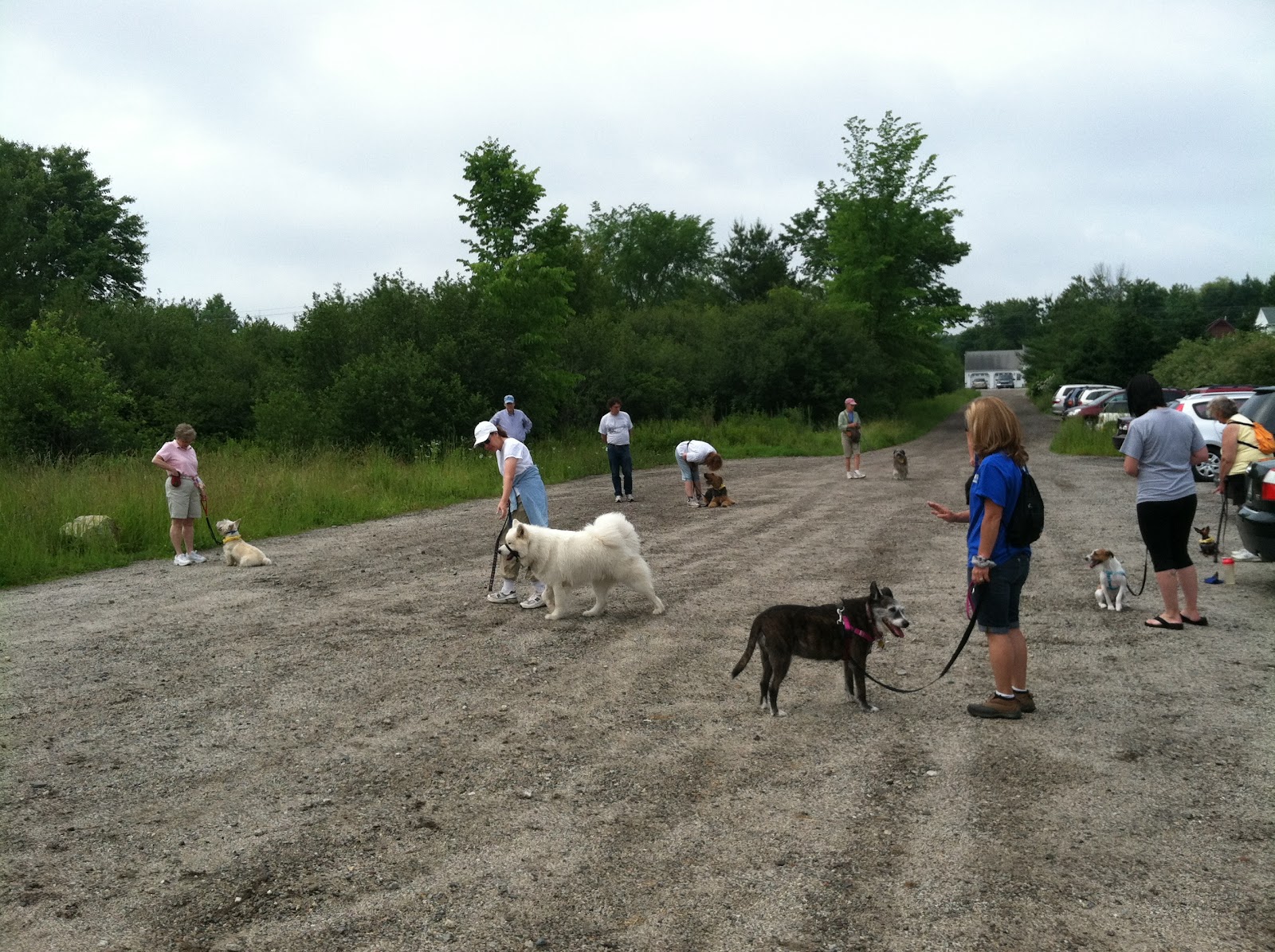
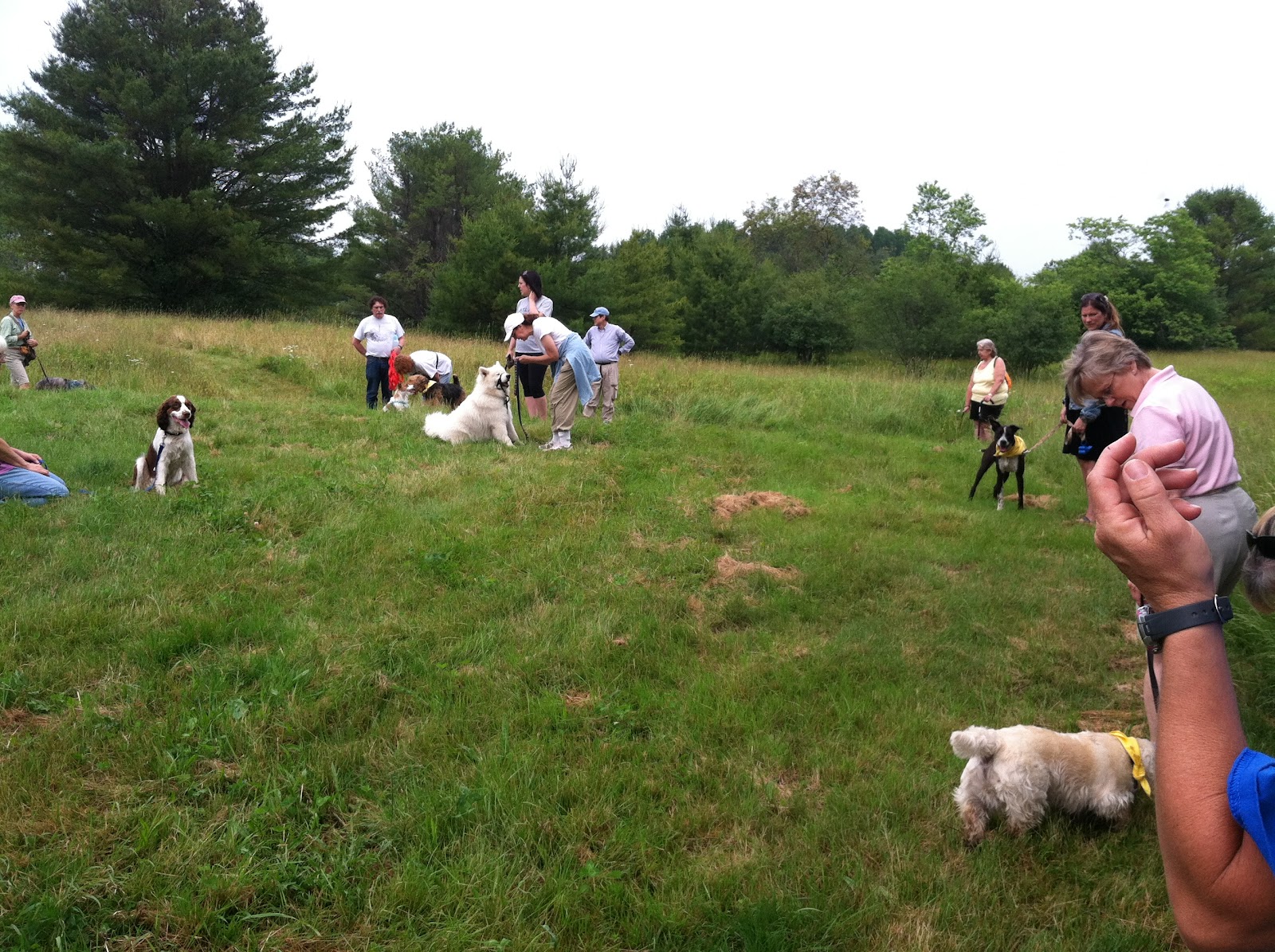
I believe there are several things you can do to set your doggie playgroup up for success before you remove the leash.  When my Outdoor Adventure Canines come together for some off leash play, we always take time to do several pass by's with each dog, so they can exchange greetings from a safe distance. 
Geting information about each other
Puff, the handsome Samoyed above, calmly walks around the group, somewhat focused on his handler but also taking a few glances at the playmates near by. Harry, Lily, Caliber, Annie, Denver, Heidi, Sara, Topper, Sushi and Brady each take a look at the dog approaching.  Within this group, we noticed various calming signals from the dogs that were stationary.  Such as looking away, licking lips, blinking, sniffing the ground, yawning, sitting or even laying down.  After giving each dog a chance to walk through the group and get some information, we were ready to do some parallel walking together.


After parallel walking and playing follow the leader I could see each dog becoming more relaxed with their surroundings and their new pack.  


Brady the Scottish Terrier LOVED the water!
Once in the woods, we allowed the dogs off leash for some running, romping and playing.  While our focus was on reinforcing our recall, I was completely enjoying the relationships that developed as a result of a successful introduction.
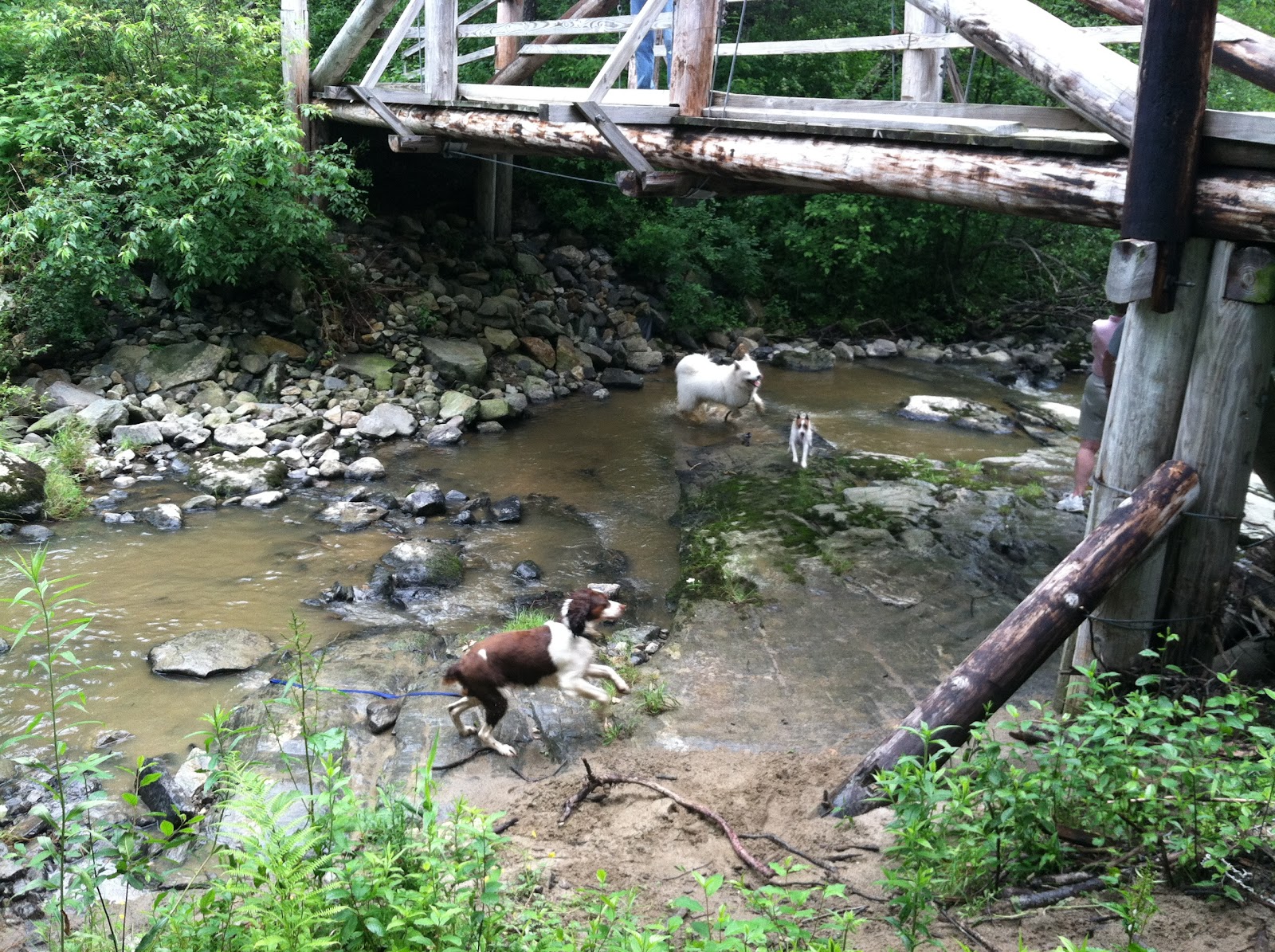
Brady, the Scottie, was crazy about the water, jumping in and swimming with little hesitation.   What a treat to see him so happy!
Pairing up for a game of chase

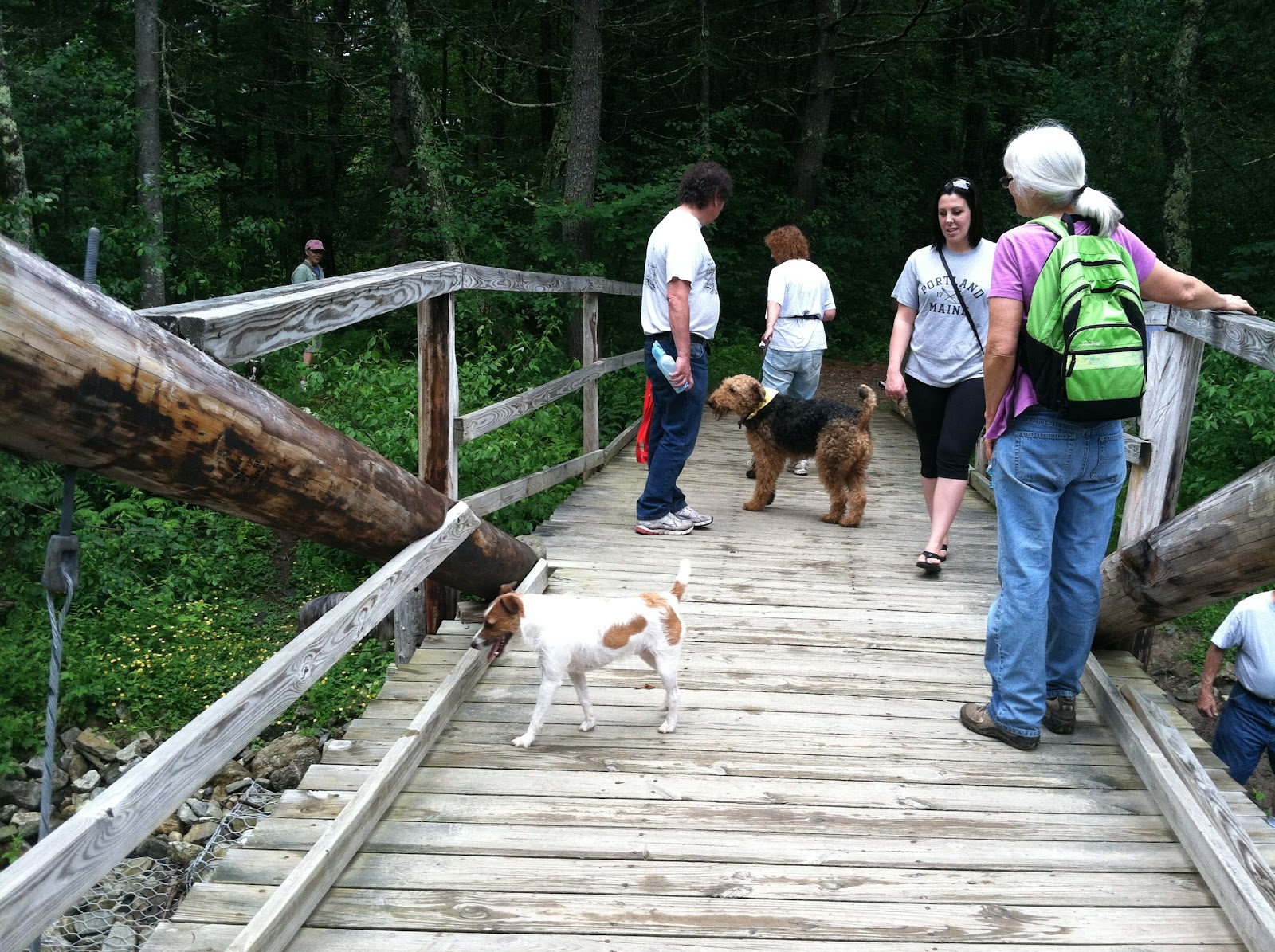
Puff quickly realized that Caliber is a playful pup and engaged in a game of chase.  Lily the springer dashed in and out of the water sometimes following Brady and sometimes chasing Puff.  Harry and Annie, the adult dogs of the group watched from the bridge as the adolescent dogs played using all nice communication skills!  
Topper and Caliber taking a break

First impressions are critical!  Teaching our dogs how to greet calmly sets them up for success, and taking time to build positive relationships is simply joyful! 

Friday, March 30, 2012

Recommended Reading for Training Your Dog

We can all agree that there is no shortage of available dog training advice and material.  From the many different books, websites, television shows and even your well intended friends or family members.  If you are looking for dog friendly training that builds a trusting relationship with your canine friend, then the list below is for you.

I highly recommend any books or videos by the following Professional Behaviorists/Veterinarians:


  • Patricia McConnell 
  • Karen Pryer
  • Jean Donaldson
  • Dr. Ian Dodman
  • Dr. Nicholas Dodman
  • Stanley Coren
  • Karen London
  • Sophia Yin
  • Kathy Sdao
  • Sue Sternberg
  • Brenda Aloff
  • Suzanne Clothier
  • Turid Rugaas
  • Victoria Stillwell
I recommend you read the description on the book or article so you know you are choosing one that fits your level of understanding.  I have personally met each one of the authors above with the exception of Stanley Coren, although I have 4 of his books!

Why is Ceaser Milan not on my list?  I believe he makes stressed out dogs submit to their fears.  While correction training inhibits the unwanted behavior instantly, it does not change the emotion which is causing the dog to react or behave the way it is.  I believe saying "no" without offering a more acceptable behavior is frustrating and increases stress.  For this reason, I prefer a more scientific approach  using Classical and Operant Conditioning which have proven positive results.

Happy Reading!

Monday, March 26, 2012

Behavior is Always Changing

Dog groups are an ever changing process of behaviors that I find fascinating to observe.  Each dog below is learning from each other what works, what is appropriate and that older dogs have boundaries.

Pepper, Annie, Coco, Sophie, & Pablo
Pepper the adult Kerry Terrier on the left is quite fearful of new dogs and is learning to feel safe with my three dogs and the young puppy.  Annie my 12 year old terrier simply goes about her business with an occasional growl at the adorable pup, Coco next to her.  Coco has learned to leave Annie alone when she has a bone, not to put her paws on Sophie the scottie's back and that a gentle paw at Pablo gets him to play every time. Sophie, my scottie in the back at age 7 avoids conflict and goes about her way.  While she lets the puppy share her bed, that is the extent of her relationship with the puppy.

Studying dog behavior helps us realize that puppies often need to learn boundaries.  Adolescent dogs are like teenagers and often need to have extra confidence in many different situations.  Adult dogs may be playful, or may be quite happy having a quiet routine that is safe and predictable.  Older dogs are great for teaching younger dogs emotional control and good boundaries.
So, be aware that a dogs life changes with age much like a humans does.  Each phase brings challenges from potty training, to having good social skills, learning boundaries and rules.  When a dog reaches adulthood, they become less active, calmer and often less social.

Depending on your age as you read this depends on your association to it.  Being a mother of 3 teenagers I understand adolescents all too well:)

Tuesday, February 28, 2012

Socialization

How can we focus with kids and cars all around!
Socialization is really an ongoing process for you and your new puppy or rescue dog.

Think about all the sights and sounds your puppy would encounter if you walked them on Commercial Street in Portland, Me.  How about walking near a school during recess or on a sidewalk over looking a beach?

When you take your puppy or rescue dog to a new environment, you should simply let him get information about the new place.  Let him look and sniff around for a bit.

These two sweet shelties did not feel comfortable with the kids quickly leaving the High School in all directions.  After a few minutes of watching everyone, they felt more comfortable and were able to focus on their sit and down stays for longer periods of time.

I often hear people say their dog will sit and stay at home, but not in a new environment, this is true of most young dogs!  I promise, if you just allow your dog to engage in his surroundings for a bit, you will have more compliance.   I recommend you let him look or sniff, then train for 5 minutes, then release him with a simple "ok" and a loose leash.  Repeat this type of session, train then "ok" each day until your dog is no longer distracted by his environment.

Each week, gradually increase the training time to build duration in the behaviors you are working on.  Always end a positive note so your dog looks forward to going back to that environment next time!

Wednesday, January 18, 2012

CBC Training Room

Sadie is staying even with distractions!

Come enjoy our large, clean training space at Tender Touch Veterinary Hospital, Scarborough, Maine.  Family members are also welcome to attend.

Class sizes are kept to 4 or 5 dogs to help everyone succeed.

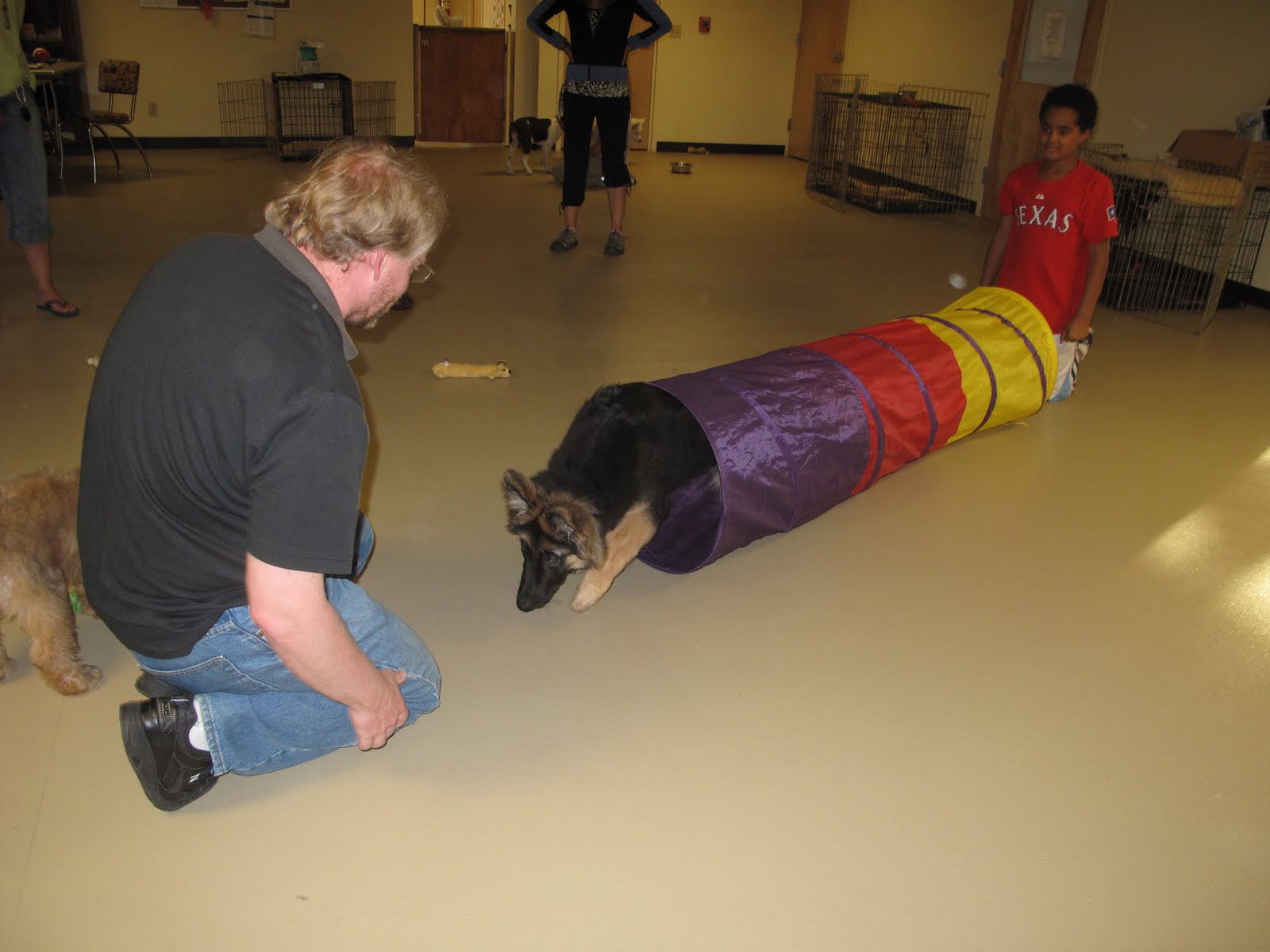
Socialization, Manners, Canine Good Citizen Certification and Private Consults are held in this space. Check out the Class schedule for a list of up coming classes!

Feisty Fido, BAT and Outdoor Adventure classes, all held outside to promote the best learning environment for these dogs.
Not sure what class your dog belongs in? Email or call me so we can set you and your canine friend up for success!

Nose work and tricks classes coming in 2012!  Hope to see you soon!

Tuesday, January 10, 2012

Off Leash Puppy Class Starts on 1/17/2012

Are those cats in there?
This year we celebrate 30 years of Off Leash Puppy Socialization, introduced by Ian Dunbar, founder of the APDT (Association of Pet Dog Trainers).

We now have scientific proof that puppies that are not exposed to other young puppies in a positive way have a much higher rate of exhibiting aggression when they become adolescents.

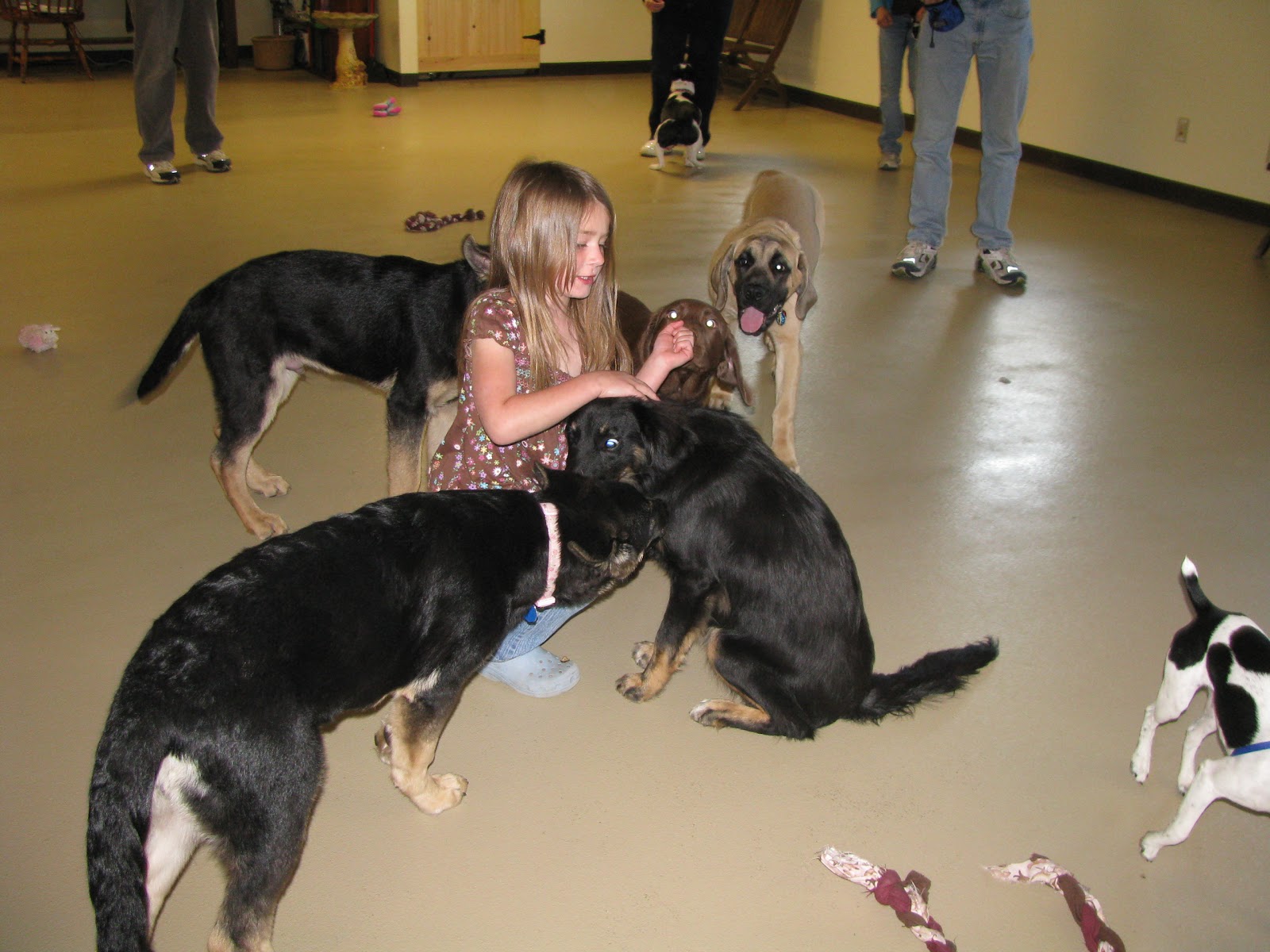
Knowing how critical it is to allow young puppies to play with other young puppies please find time to attend an Off Leash Play Class with your new puppy!

While you can train a puppy at any age, socialization is best done between the ages of 8 and 14 weeks.  It is important to have your puppy receive at least one set of shots before attending any classes.  Again, make sure you attend an Off Leash class so your puppy can grow to be the most balanced he can be!


I sometimes have clients attend 2 sessions of Puppy Socialization before entering a manners class. We expose your puppy to dogs, strange people, children, cats, birds, stairs, different types of footing, crutches, skateboards, sweeper hoses and many different noises.  Learning how to desensitize your pups to new things and allowing you pup to to learn how to resolve conflict is essential!

Who does not love a dog with a soft mouth?  One with good emotional control, void of guarding behaviors.  Most of the problem behaviors I see every day could have been avoided with proper socialization!