Tuesday, October 4, 2011

Alternate Behavior

Trainers often teach a dog to focus on their handler by using a "watch me" or "look at me" cue.  Once this is well conditioned and can be performed without distractions, we can teach the dog an "Auto watch."

Trainers use this behavior when desensitizing dogs to scary stimuli.  For example, maybe your dog barks at strangers, the mail person, or other dogs.  When we desensitize our dogs to things that scare them, we actually want our dog to "Look" at the scary stimuli and then look back at us for the reward, hence an "auto watch!"
Finn looks at the German Shepherd, then back at
 mom rather than his old behavior of barking!
For many dogs, even those who are "friendly" or enjoy the company of other dogs, walking past a strange dog or person while confined in place is extremely challenging and often stressful for dog and handler.  My goal is not only to help the owners teach their dog an incompatible behavior, something other than what the dog has chosen like barking, lunging or pulling, but also to change the emotional state of the dog.  These dogs often see a dog and immediately feel stressed, frustrated, anxious or aroused. We can change this first emotional response so the dog is able to control his emotions by feeling good when this stimuli is presented.

Overall changes that occur with training:
* Enhanced relationship between dog and owner
* Better understanding of your dogs body language
* Understanding thresholds
* Clear communication and expectations
* Duration in behavior
* Achieving better focus
* Greatly decreasing recovery time of the dog
* Providing owners with appropriate responses
* Increased confidence in the owner

If your dog has been called a "Feisty fido" or "Leash lunger" think about a training program using an alternate or incompatible behavior that works!  Check out my Class schedule for a training class that works!

Monday, September 26, 2011

Appreciate the Warning

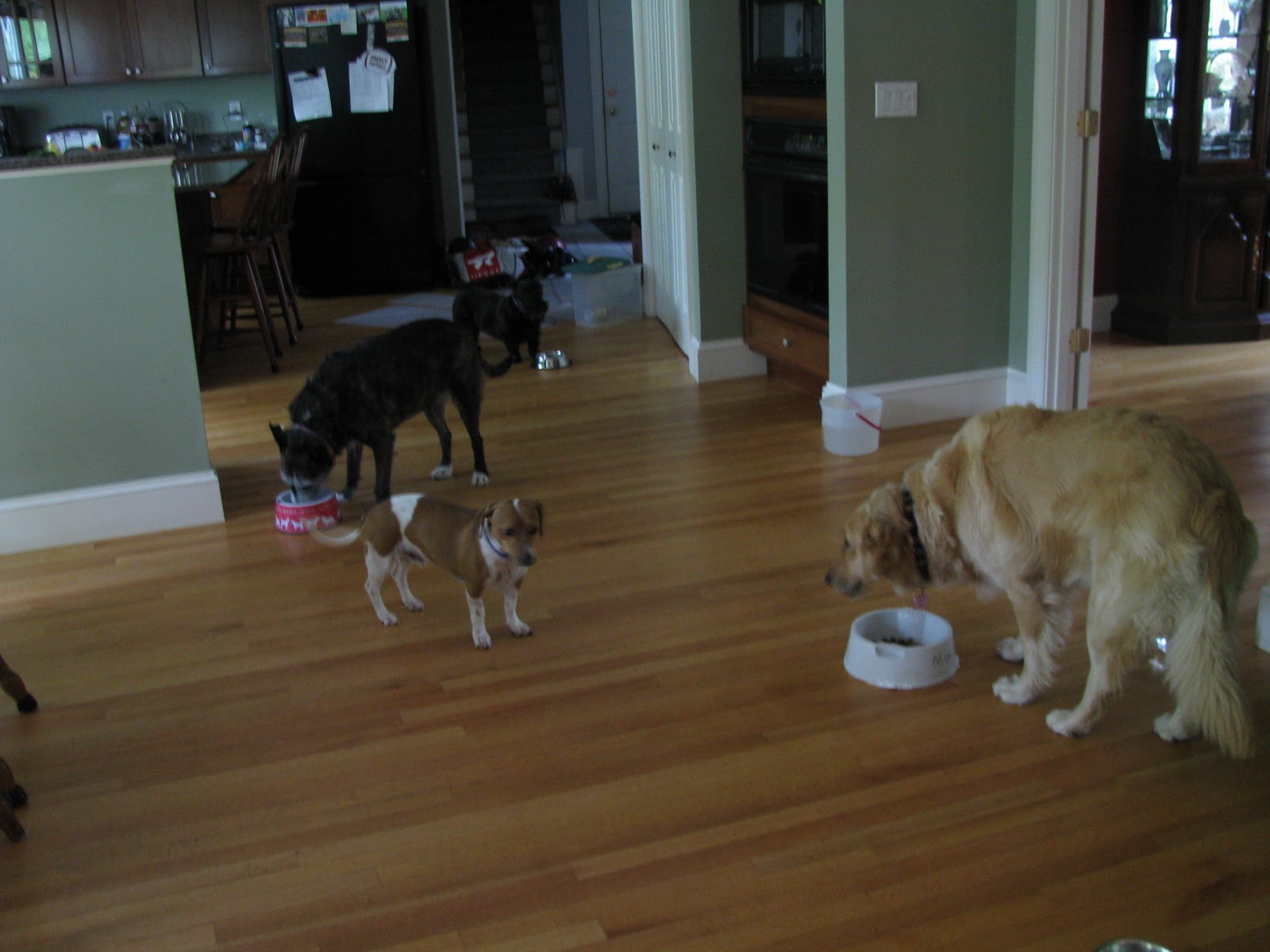
Dewey understands the golden's "look" and avoids a bite!
I recently met a young man who has been bitten several times, with a level 1 and level 2 bite from his dog.  In each case the dog was sitting on the couch by his wife when he approached.  Each time the dog growled, he said "no" to the dog and sat down anyway, and yes he got bitten.

Consider each time now that the husband comes near the couch, the wife gets anxious, afraid her sweet loving pooch will bite at her husband.  Her anxiety only becomes apparent to the dog when that "man" comes near.  If his approach predicts mom being afraid, then he will be afraid also.  It is the dogs natural instinct to make himself feel safe, and if a growl or bite works then he will use it!

Knowing the dog loved cheese, I recommended dad approached the couch, make no eye contact with the dog, and only toss a small piece of cheese near him and walk away.  We did this repetition several times until we saw the dog was actually happy about the man approaching.  Next we had the man approach, sit down treat the dog and then leave.  Again with several repetitions, the wife began to relax and see that the dog could be happy about her husbands approach and presence as long as it predicted something good!

The Point of this article is to change the reason the dog is growling, rather than just telling him to "No!" We do not modify aggression with aggression anymore, at least Positive Reinforcement Trainers do not because we are educated on changing the emotions of the dog.

Wednesday, September 14, 2011

Pinch or Choke

Because September is Safety month, I wanted to talk a little bit about these controversial collars.
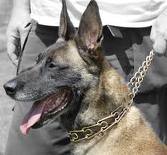
pinch collar

Do you know which one is actually more dangerous?  While the Pinch collar looks barbaric with its long spikes, it will not choke a dog to the point of death.  On the other hand, the old fashion choke collar is very dangerous and most anyone you talk to in the dog community will confirm this.  I am not advocating either, but want to clarify that one is seriously more dangerous than the other.

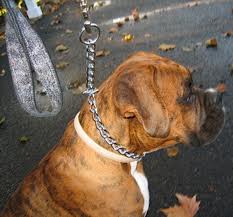
choke chain
Unfortunately, most dog enthusiasts have heard about or sadly experienced a tragedy involving a dog while wearing a choke collar.  Certainly no one plans for a dog to choke, however, due to the continued use of choke collars, tragedies do occur.  If you own a choke chain, please toss it out TODAY, before your best friend suffers an unexpected accident.

Not convinced?  These collars can easily get caught on crates, fences, wooden gates, bed frames, chairs, drawer handles, window cranks, dishwasher handles, car door handles, car locks, tree branches, roots, other dogs collars, and many more unexpected items.  So, please never put a choke collar around your dogs neck again.

Friday, September 9, 2011

Code Green!

While reading a book in the hospital waiting room last week, I heard these words spoken loudly over the speaker, CODE GREEN, CODE GREEN!  Startled, I immediately looked at the staff workers all busy behind the check-in counter.  Not one of them looked up, moved or even flinched.  It was as though they heard nothing.  Ok, if they are not worried, nor will I.  I took a deep breath and realized my heart was pounding having been startled, I soon relaxed and went back to my reading.  

What if your dog is the one to hear something scary and bark, and they move to the window or door and look back at you?  If you like this behavior, then great, get up and say?  "Who is hear?"  However if you know it is the neighbor that arrives home precisely the same time every day and you prefer your dog not tell you each day.  Then help him understand this by not reacting.  In fact, you can ignore her/him.

Even a look is rewarding, so just continue doing what you were, with no reaction.  Your dog will read your energy as calm and be calm also.  Unless, you have been rewarding this behavior for some time.  Then you will see your dog's behavior become more intense for a while as they are use to getting a response from you.  After a period of time, with you ignoring the alarm bark, your dog will give up and will no longer bark at this particular sound.  The term is called Extinction Burst, which means the dog will eventually give up if not receiving any reward or attention.

Tuesday, September 6, 2011

New Small Dog Leash Lungers Class

Our Small Dog Socialization class has been growing so I would like to enhance the format for each participant.  Many small dogs become reactive on the leash and are difficult to walk in the presence of an unfamiliar dog or people.  This may be the result of poor socialization, bullying behaviors, genetics, dominant aggression, fear aggression, positive punishment or other factors.

I would like to help your small dog learn to be non reactive when around scary stimuli such as strange dogs or people.  Using a Positive Association or "Click to Calm" approach, we can change the association your dog has to a particular stimuli.
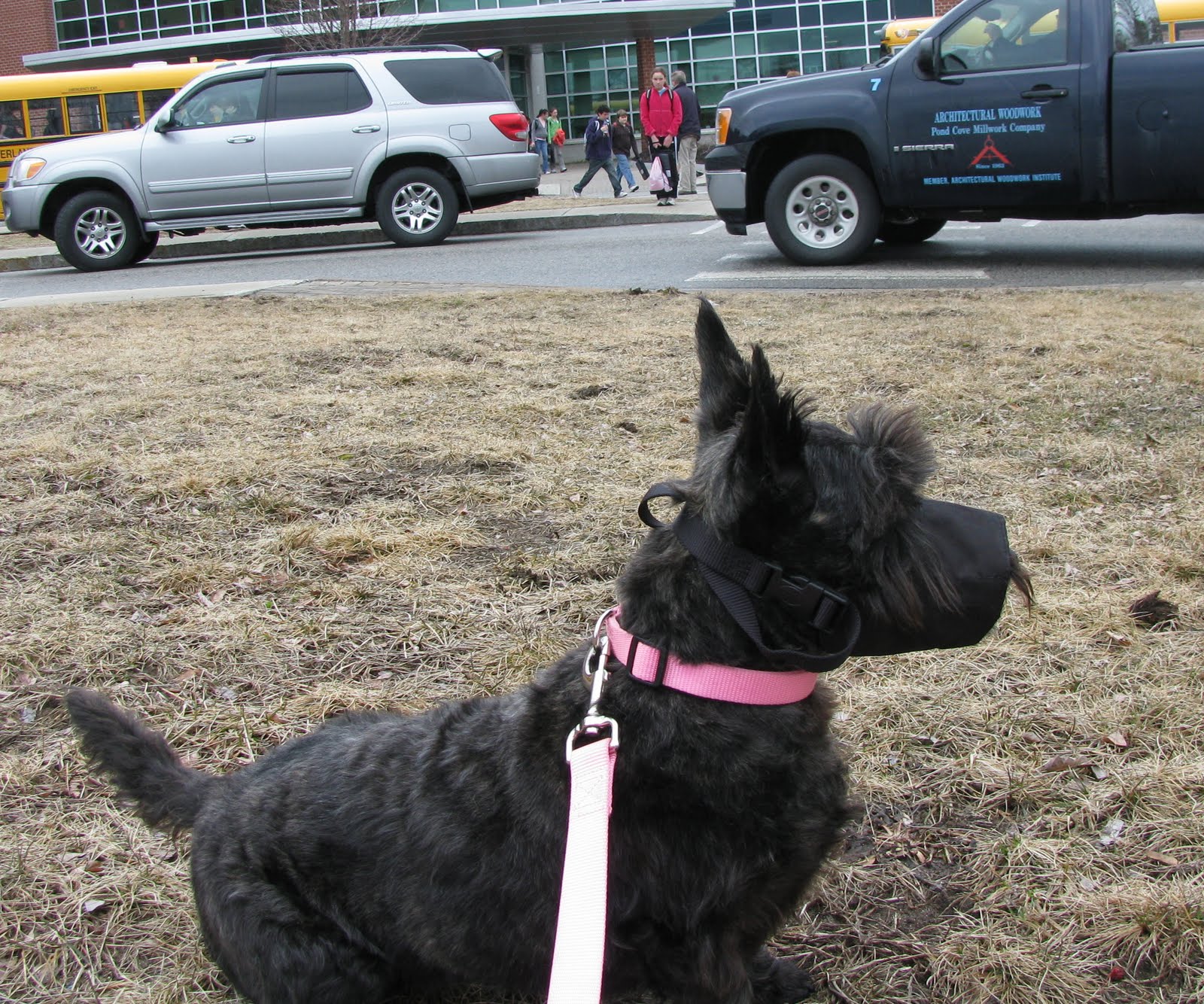
Sophie wore a muzzle for safety
Have you met my Scottie, Sophie?  Anyone see her bark and lunge at dogs or people in the past?  Well, she was a Feisty Fido when I got her!  After completing several weeks in class with me or my daughter, she is now a different dog, even earning her Canine Good Citizen Certification this past Spring.  How about my old terrier Annie, she too was very dog reactive, but now helps other dogs with their greeting skills!

Sophie remaining calm while near people and dogs
This class will be held Thursday evenings 6:15, beginning Sept. 29, at Tender Touch Veterinary Hospital. To register please contact me!  Safety procedures will be given and followed each week upon arriving and leaving the training center.
Sophie earned her CGC in March 2011