Wednesday, February 27, 2013

Changing Behavior

When changing your dogs behavior or habits it is best to go slow and keep it simple.  Changing habits takes time and while the process may seem overwhelming at times, remember small successes are a big deal!
Steps to changing your dogs behavior: 
1. Make a plan, put it in writing, including specific detailed goals
2. Identify your dogs triggers and the alternative behavior you desire
3. Focus on asking your dog to do the alternative behavior or habit every single time the trigger happens at a distance, for several weeks.
4. Reward your dog generously for offering the alternative behavior
several reactive dogs changing their behavior
  • Reward even if the dog attempts the behavior.
  • Reward even if the dog takes one step or turns his head to consider the option of complying.
  • Avoid only rewarding when the dog completes the new behavior, but do reward the dog for even the slightest attempt of any new behavior.  This is called a "choice point",  it is to your advantage to reward any attempt in making the correct choice!  
  • Avoid this mistake:  if your dog is afraid of the mail carrier, then begin with all adults but avoid the mail carrier for now.  When your expectations are not real, you will be frustrated. Setting your dog up for success is best done when the triggers are very low and far away, this is a good plan for getting an alternative behavior started.
  • Even if the dog does it for one second!  When you begin to reward slight offerings of new behavior, your dog will more likely want to continue to play this new game!
Take it slow, breathe,  and relax as your dog is depending on you!  Setting your dog up for success also implies training when YOU are in a calm mental state.  If it helps, think of the many things your dog does right and build one small behavior at a time!

Next, I will offer specific games to play in specific locations to help you progress.


Monday, February 25, 2013

Aggression in Dogs

Canine aggression will always be an interesting topic discussed among dog lovers.  We know conflicts are normal and it is our job as humans to teach young children how to cope or resolve conflicts with other children and adults.

A Stressful Greeting
We humans are taught to resolve conflict by using our words at a young age, often through examples by our parents, teachers and grandparents.  Yet, many teenagers and adults have difficulty coping with conflict and may find themselves in a yelling or physical situation.  Having someone who loves them and are willing to help them change their behavior in very small steps is a blessing and a must for them to be successful.

If you find yourself the owner of a dog showing aggression, take a deep breath and first realize that changing behavior is difficult and will take time.  Many animals use whatever defensive mechanisms they have  to scare threatening intruders or scary stimuli away as a mechanism to feel safe.  Cows may only be able to kick at their aggressor, chickens may claw and use their beaks to peck or bite a scary stimuli.  Cats are known for their hissing, arched back and fast clawing as a way to say "back off."

Our furry canine friends also use what works for them which is often rapid barking, growling, show of teeth, lunging or snapping to scare off anything that they are afraid of.  If your dog is getting into scuffles at a park or daycare, please do not take him there anymore.  Aggression is a defensive mechanism that dogs will use to keep themselves safe or gain resources.  If your dog learns that aggression works, then he will continue to use it and even get good at it.

Now, avoid putting your dog in situations where he is showing even the smallest amount of aggression as you want to change this behavior right?  Then eliminate the possibility of practicing an unwanted behavior.

  • Make a list of the triggers that set him off, even those that put him into a heightened arousal or anxious state.  
  • Make a list of the alternative behavior you prefer your dog do.
  • Start slow and set your dog up for success.  For example if your dog barks at kids 20 feet away, then keep him 60 feet away for now.
  • Know what motivates your dog and be GENEROUS with the reward when he offers the alternative behavior.
This is just the beginning, breathe, really take a big breath as your tension is not helpful to your dog in any way while helping him feel safer.  Make your plan and remember your entire day is a series of habits or sequences of behavior just like your dog.  So, your plan should set your dog up for success just for today as we will be taking this one day at a time.  Stay tuned for more tips on changing your dogs behavior.


Friday, February 8, 2013

No Class Sat. Due to Blizzard


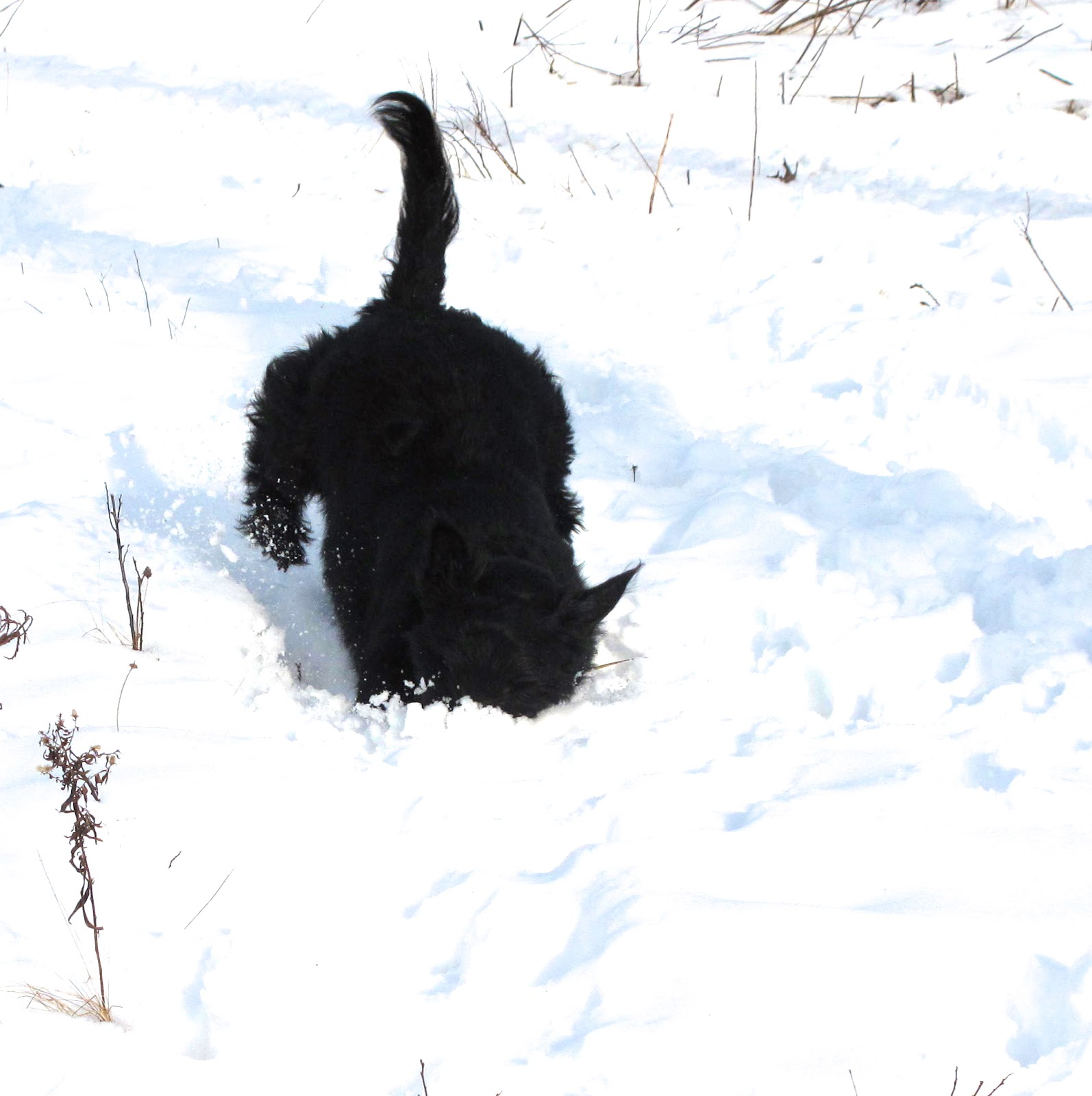
Oh No.......Prince falls in a hole!  No he was not hunting,
he was running to me and I caught this by luck.
No Classes Saturday 2/9/2013 Due to the Blizzard!

Stay Home and Be Safe!

Wednesday, February 6, 2013

Control Unleashed Class

Control Unleashed Class was designed by Leslie McDevitt as a way of helping her own dog cope with the intense distractions at agility events. Not an easy task for a dog who was worried about strange dogs near and also afraid of noises.  The concept of CU is to create a focused and more confident dog!

Who needs Control Unleashed Classes?
  • Dogs that are uncomfortable or unable to work off lead around other dogs
  • Dogs that are easily distracted and have difficulty concentrating
  • Dogs that are reactive or easily aroused
  • Dogs that are anxious or stressed and often become shut down
  • Dogs that are unable to control their impulses when excited
Trainers agree this class structure offers a practical and positive approached to helping dogs who  struggle with environmental changes.    Understanding how to use desensitization and operant conditioning is presented in a clear scientific way so everyone can understand the steps.

Class structure is incredibly flexible to meet the individual dogs' temperaments and needs.  


CU involves exercising self-control through the use of default behaviors which are always a good thing, especially for dogs with poor focus or arousal issues.  It involves self-calming techniques, which is great for dogs that are shy or fearful or reactive or just aroused.  CU involves a highly predictable behavior that has them re-orient to their handler in times of conflict.  In short, this class provides highly predictable rule structure, valuable learning benefits, and  increased connection and teamwork between dog and person!
I highly recommend you try this class with a certified trainer, you will be so glad you did!

Thursday, January 17, 2013

New Year - Old Dog

Annie 
I hope this article finds you enjoying the beginning of this new year!  January brings so many beginnings, not just a new year, but New Year's resolutions as well.  Some personal, some professional and then some just for fun!

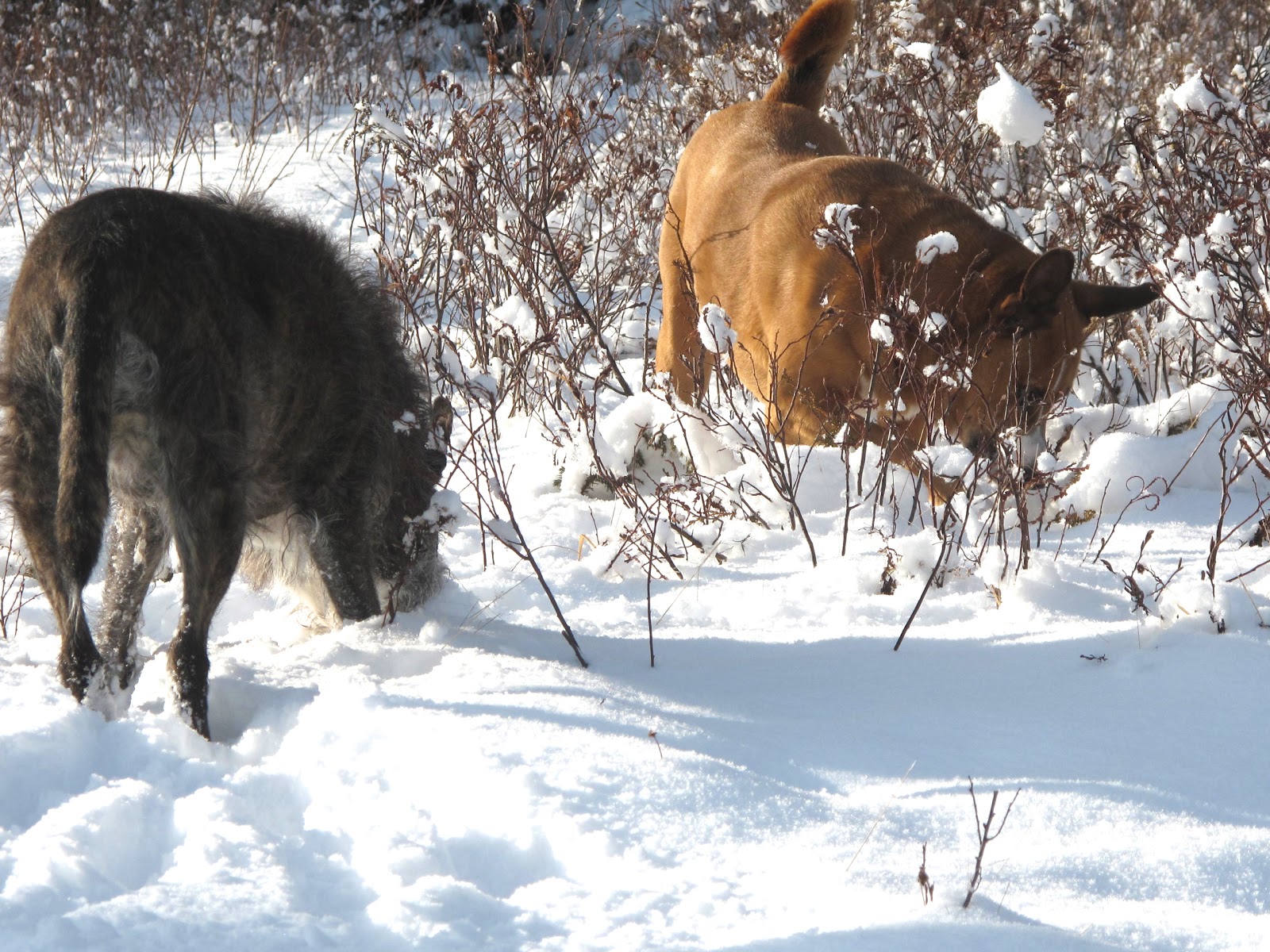
Lately, I have been thinking about the fun resolutions -- what it is I would enjoy, not what I feel I need to do.  My idea of fun is walking through the snow in the woods, enjoying the fresh air and watching the dogs be dogs.  Sniffing, chasing, marking, digging, what ever natural behaviors they choose as no leashes are ever used here!
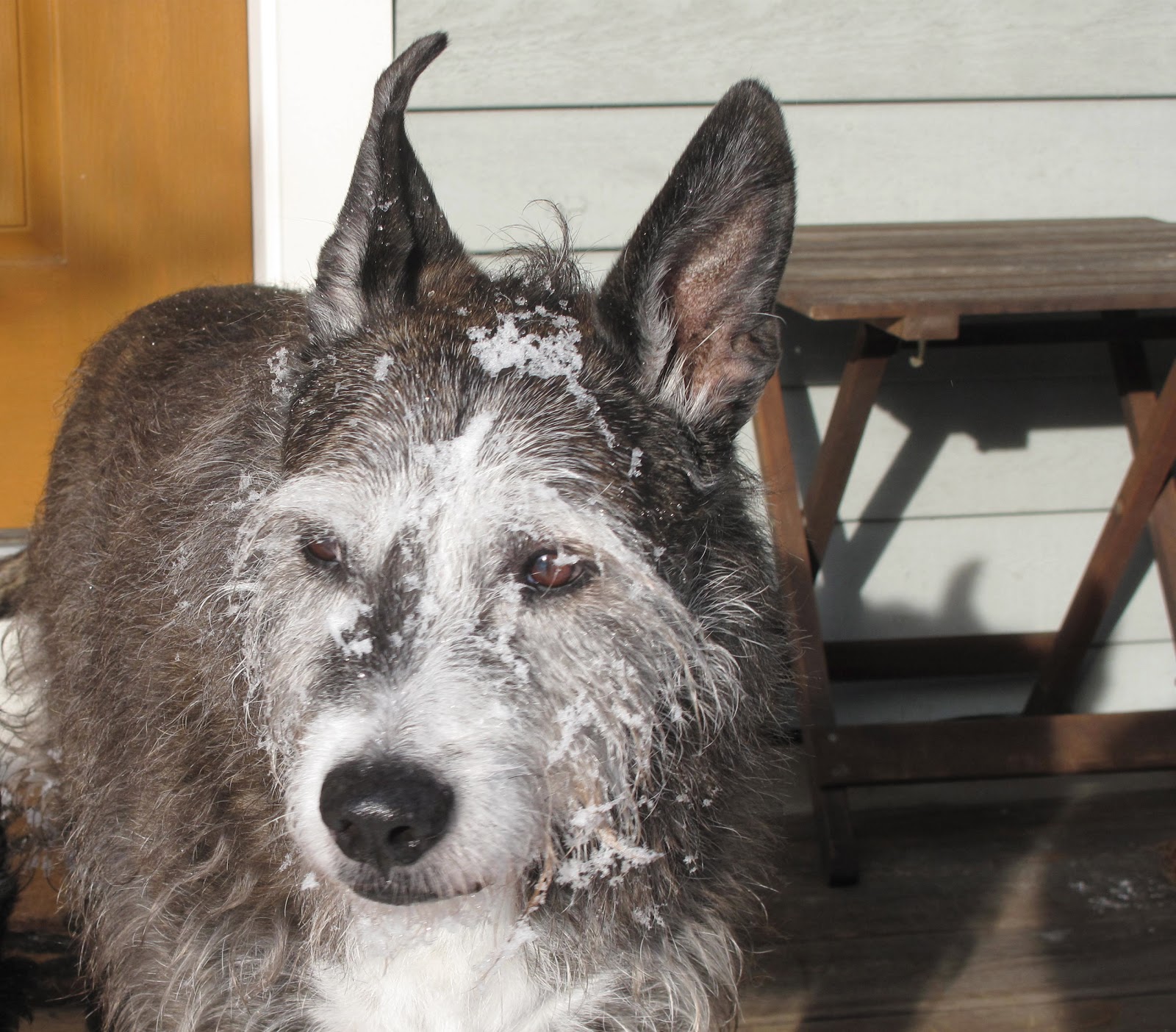
On our early morning walk today along the snowmobile trail with my 4 dogs, I realized my old girl Annie, who just crossed her thirteenth birthday had decided to wander off the trail into 8 inches of soft snow and was having difficulty backing up.  As I headed her way she gave a big wag of her tail and managed to get herself back on the trail.  She must have either been thrilled to be free or simply didn't want the others to get too far ahead because she lunged and actually ran several strides along the trail.  With an open mouth soft body wags, she was one happy girl to be included on this adventure.  While it is true an older dog can not always join in the fun, I can tell when Annie is at the door waiting and bouncing with the others she is ready to go.  Other times, she does not get out of her cozy bed which tells me she is taking a pass.

So, my New Year's resolution is to spend more time and attention to my oldest and most loyal girl.  While I believe these winter walks are certainly life enrichment, I also believe there are several classes an older dog would enjoy! Even a dog over 10 years of age can enjoy the following:
      • Nose Work
  • Tracking
  • Control Unleashed
  • Loose Leash Walking (star of the class:)


If you have an older dog, I hope you have time in your busy life to add some life enrichment activities for him or her!  I believe you will find it both relaxing and rewarding.
Although Annie may be the last dog, she is still ahead of me:)