Sunday, October 12, 2014

Why Does My Dog Do That?

Do you ever wonder why your dog performs certain behaviors or motor patterns?  I sure have! For example: Why does my dog roll on smelly things?  Why does my dog shake his toy?  Should I be worried if my dog stalks his playmate?  Why does my dog guard his bones?

Specific behaviors that are unique to our dogs are called Phylogenetic behaviors.  These behaviors, or behavior patterns, have developed over many many generations and truly have evolutionary significance to maximize reproduction and survival.  Stalking and bouncing are examples of phylogenetic behavior, as is an innate fear of loud noises.
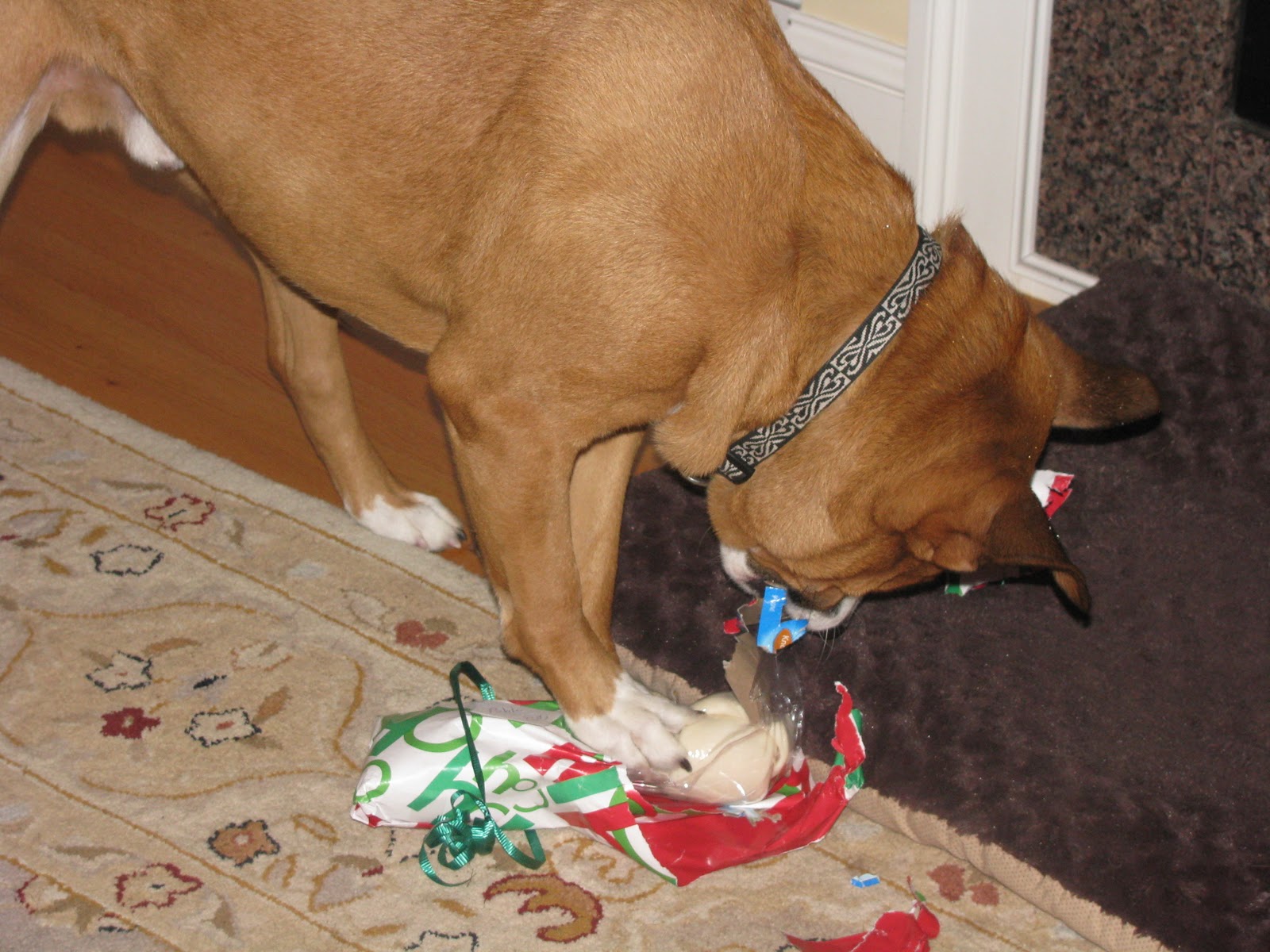
Hunting, for fun or survival?

When we think of our dogs behaviors we can summarize that all their behaviors come from three simple motivations:
1. Hunting/obtaining food
2. Safety/avoidance seeking
3. Sexual/reproductive behaviors

Behaviors observed in just the hunting motivations:   orient to sound or moving object, stare, freeze, creep, stalk, run, jump, grab, hold, shake, hold down, kill, eat, guard.

Can we change phylogenetic behaviors?  All behaviors can be modified to some degree with patience and a strong counter conditioning process.

Inherently genetic behaviors may be strong in your dog and low in my dog, as each dog has a different  genetic make up.  Such as rolling in feces, a yucky behavior to us humans, but many of our dogs do it!  Why? The science behind this behavior is that our dogs roll in animal feces or on a dead animal so they can mask their scent to better help them sneak up on their prey.  Does your dog need to stalk his prey for survival? Unlikely, but this behavior can be a strong genetic trait.

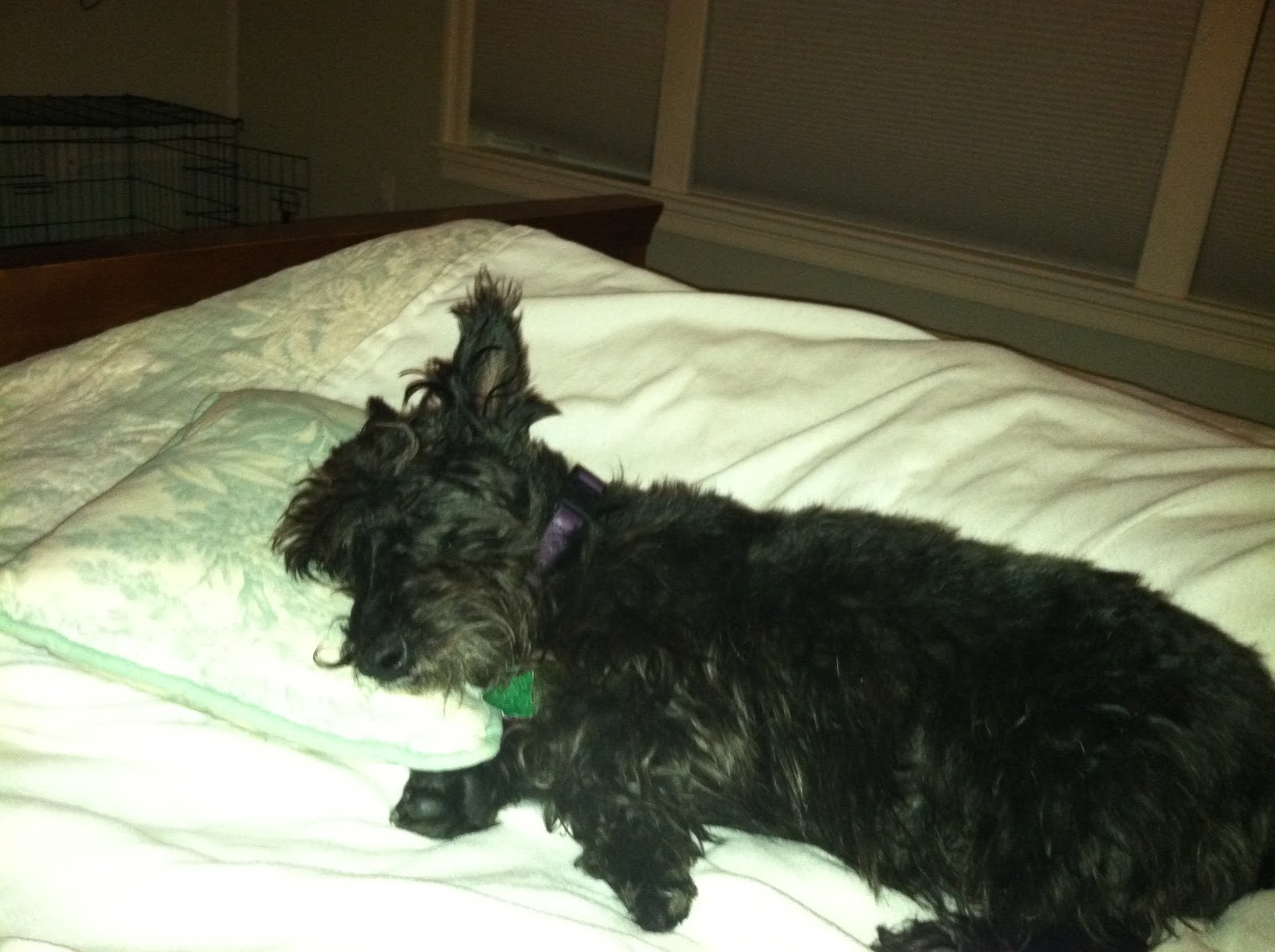
Resting for the next hunt.
We know some dogs learn to play fetch just by watching another dog play fetch. This is called Social Learning.  Other dogs perform behaviors for the reward, for example my female Scottie will frequent my neighbors back yard and scan for a squirrel to come down the bird feeder. She has been successful on two occasions and enjoyed eating them as well.  Does she need to hunt for survival?  No, but this behavior is both rewarding to her, and a strong genetic trait, therefore she will repeat it.

Many dogs use hunting behavior patterns in play, others will use sexual motor patterns like mounting and neck biting to initiate play.  The point is our dogs do many behavior patterns as a result of their genetic make up. If this behavior is followed by a reward, then this behavior will most likely continue to be practiced.


Wednesday, October 1, 2014

One Behavior You Must Teach Your Puppy?

To Sit?  That is a nice default behavior, but not the most important one to teach.

To Come?  Great behavior to have consistently for sure!

To Leave it?  Awesome behavior to have, great on walks both on and off leash!
hand feeding for good behavior

How about not to bite human flesh?  Sounds pretty important to me! Bite inhibition is the technical term for a dogs ability to control the pressure they use when biting. If you could only teach your puppy or new rescue dog one behavior, please remember to teach him a soft mouth -- aka bite inhibition.

How?  By giving your dog appropriate feedback.  Over several days with the following positive techniques, your puppy will learn this life saving skill.

1. Hand feeding daily meals, release the food when your puppy is gentle or licks.  If you feel teeth, wait until he softens, then reward.
Example:  Say your pups name and when he look at you, offer a piece of food.  Say your pups name and "come" offer a piece of food as a reward.  Reward your puppy for coming and sitting 10 times per meal and you will have a solid sit and a softer mouth!


Playing Tug can teach a soft mouth
2. Play tug, using the rules of tug you can quickly help your puppy learn that when you feel teeth on your skin, playing stops.  Remember, do not drop the toy or you could teach your puppy that biting is how they do get the toy.  Instead, ask for a sit to begin the game, then say "take it" and play "tug" keeping the toy low to the ground.  Next, put a treat to the pups nose and say "leave it" and
exchange with the food while putting the toy behind your back.  Repeat, sit, take it, tug, leave it.


flat pan cake hands are non threatening
3. Body handling your puppy with a soft, flat gentle hand.  If your puppy bites your hand, then let your hand go limp, dead like, and wait until the puppy removes his mouth from your hand.  Repeat slowly and gently as your pup learns that hands predict good gentle scratches and massaging.  Some puppies respond if you scream, but some thing you are simply playing, so this feedback may help and it may not as all puppies are different.


4. Allowing your puppy playtime with another friendly dog or in a puppy group.  Playing with other pups will surely help your puppy learn
Puppy play group
not to bite too hard, many pups learn to use a soft mouth when playing with their mother, however some pups miss out on this lesson and will therefore learn it while playing with other puppies and of course playing with you.

Teaching your puppy a soft mouth or  good bite inhibition is the ONE most important behavior you need to teach.  Remember, your pup will not stop using his mouth on you and your clothes in 1 day as he has been using it with his siblings for 8 weeks,  be patient and give your puppy the feedback he so needs to be able to live with humans.

What should you not do?  Scare your puppy or teach him that human hands are to be feared, as this tactic will most likely make him want to bite hands more.  Why?  Science has taught us that dogs who are handled in a physical or rough manner are more often to bite later in life.  Science has also taught us that aggression breeds more aggression.

If you do not want your puppy to use his mouth to resolve conflict, then please do not use your hands to resolve conflict.  Science has taught us that rough hands on a pup, will create unwanted behavior changes as the pup matures.  Example: Submissive peeing, over the top wiggly greetings, worse mouthy behavior, biting later as an adolescent dog, growly and avoidance behaviors.

For a reference on teaching a soft mouth, refer to Sophia Yin's Low Stress Handling techniques
Dr. Sophia Yin, Low Stress Handling.  Although Sophia passed away just yesterday, she will always be a source to reference because she educated those of us in the Pet Industry that the emotional well being of the animal is essential to avoiding unwanted behavior changes.


Wednesday, September 17, 2014

Why is my Dog Lunging on the Leash?

Do you own a dog that does not act "normal" when he sees another dog on leash? 
Learning good emotional control takes practice
Many dogs do not have good coping skills to greet another dog when confined by a leash.    
You may describe this type of dog as fearful, hyper vigilant, aggressive, reactive, out of control, barks all the time, rude, pushy, anxious or even clingy.  Dogs who exhibit these behaviors are cruelly labeled and often given up on, but the truth is that these behaviors are your dog's way of begging for some help.  If your dog is displaying these emotions he is clearly not a calm dog, and therefore not a balanced or content dog.  Unbalanced dogs are riddled with emotions they cannot control, which make them difficult to live with and own, but these are the dogs that need us the most.....


With effective behavior modification programs, these anxious reactive dogs can thrive in our homes and communities.  Having a plan to keep them safe, predictable exercise routines, desensitization tools, healthy nutrition, doggie Zen and possibly medication, these dogs will love us unconditionally.  Just look in there eyes and help them feel safe, always..

If you have taken on the task to raise a dog with fearful reactive behaviors, know you are not alone.  I personally have three dogs who each have different levels of fears and often use distance cues with humans and dogs.  I understand your stress of owning an unbalanced dog....  Even my family members have called them names, not truly understanding my dogs level of stress. I feel an enormous amount of empathy for these animals as I see in their body language how much more worried they are then other dogs.  I have spent hours counter condition their fears to various stimuli and I work very hard to have a plan each time I take them in public so I can set them up
Thinking through arousal...
for success.  I manage for safety, continually counter condition their fear emotions to positive ones so they know what to do in different situations and cherish each calm moment we have together.  My two females came to me with bite histories and have each received their Canine Good Citizen Certification from two different trainers.  One has gone on to be Therapy Dog International Certified, so do not lose hope and celebrate each small daily success!  


Using the right balance of tools, your dog will one day be able to think through his arousal so you can reward him and not be frustrated with him.

Sunday, August 24, 2014

Five Things You Should Never do to a Puppy!

Reward based training, with clear rules is scientifically
 the most effective and humane way to train.
When you first bring your puppy home, you will notice they use their mouths to interact with everything around them, including you!  After being separated from their litter mates, puppy's must learn learn to live in a human home where the rules are quite different.  Please do not expect them to acquire this knowledge in one day or even one week, as changing habits simply does not occur that quickly.  Setting rules in a gentle way will raise a gentle pup.

Each month I consult with stressed clients whose now 1 year old pup is biting family members, some even attacking.  Every case has one common history fact: "I was told to do this when he growls at me."

FIVE THINGS YOU SHOULD NEVER DO TO A PUPPY: (harsh handling a pup can create aggression in your pup later in life)
1. Never hold his mouth closed when he bites you.
2. Never stick your fingers down his throat.
Flat gentle hands always, never scruff or
biting may get worse as your puppy will need to defend himself.
3. Never grab him by the scruff and hold him down until he submits.
4. Never stare him in the eye until he submits.
5. NEVER use your hands to cause physical pain in any way.

STOP!!!!!  Aggression teaches the learner to be aggressive to others. Social learning is real and present in every home.  Weather you are observing dogs, rats, birds or children, you will see that the environment influences behavior.


WHAT SHOULD YOU DO?
1. Give your puppy appropriate feedback when he uses his mouth on you.  Give a loud "OUCH" and move away from the puppy for a few seconds.  If he however, is simply mouthing with no pressure, you can ignore him as he is using a soft mouth and many breeds are bred to use their mouths to assist owners in many ways.
Puppies and children learn together!
2. Enroll your puppy  in an AKC STAR Puppy Socialization class taught by a Certified Pet Dog Trainer, playing with other puppies teaches bite inhibition.
3. Hand feed your puppy as many meals as you can.  Place the food in the palm of your hand under your thumb, if you feel teeth, wait until he licks, then remove your thumb and reward (a task for mom and dad, not children). Try feeding your pup some peanut butter on a metal spoon (this may be necessary for pups with a particular hard mouth.  They will learn to lick as it is more rewarding.
Teaching tug is essential and fun!
4. Play tug with your puppy (great for teaching "take it" and leave it").  Grab a few treats in your hand and begin moving the toy back and forth on the ground say "take it", when your puppy mouths the toy use a happy pitch, "yes, good dog" after a few seconds of tug, relax the pressure on the tug toy but do not let go, say, "leave it" quickly offer your pup a treat right at his nose.  He will let go and take the treat.  Yea!  you just completed a positive pattern of behaviors you and your dog both agree on!  Repeat the pattern many times and if your puppy ever bites your skin, DO NOT LET GO OF THE TOY,  just give a loud "leave it" and your puppy will let go.  IMPORTANT!!  Do not reward your puppy with food after he just bit your hand:(  This will only tell him that biting you gets a treat.
hand feeding is a good thing to do!
5. As your puppy grows, he will fall into old habits of using his mouth to grab things that move like pants, skirts, things swinging in children's hands.  So, be prepared and set your puppy up for success by: using each meal as a training time to help your pup learn good behaviors, use your pitch to help the pup know when he is doing something right, use good timing and always reward your pup with a happy "good dog" when he mouths his toys.  Reinforce the "leave it" cue several times per day as repetition is a good thing.  Be patient, your hands should always be rewarding when they touch another being -- always!


Tuesday, July 22, 2014

Don't Shoot the Dog - Jackpots Revised

Many of you have read Karen Pryer's book, Don't Shoot the Dog  It is an educational book for parents as well as dog owners.  After 20 years, Karen explains how the use of jackpots can work when used effectively.  The below insert is straight from Karen's Blog and is worth reading:
Remember, though, that no one is always right. We all keep learning things all the time, revising and adding to what we knew before. That's one of the joys of science and a valuable phenomenon in the clicker training world.
Looking back at the jackpot section in Don't Shoot the Dog, now, twenty years after it was written and six years after the revision supervised by Murray Newman, I think that I failed to differentiate between jackpots as I see them, and another tool altogether: the non-contingent reward.
A non-contingent reward "just because"
A non-contingent reward is also something you get by surprise, but it is not associated with any particular behavior. One example in the book was the two free fish we gave to a discouraged dolphin, which perked her up and set her to trying to earn reinforcement again. Another example in the book was the ticket for ten free riding lessons that my parents bought me when, at sixteen, I was behaving poorly for weeks on end. It instantly corrected my bad mood. I included these as jackpots, but they were not; they were both examples of a non-contingent reward. The most powerful use of a non-contingent reward is to counteract the effects of an extinction curve; I know the dolphin in question was undergoing extinction of a bunch of operant behaviors; probably this sulky teenager was, too. Getting the news that good things are still available revived the efforts to seek reinforcement again.
Like the jackpot, a non-contingent reward is a tool to use rarely. And, like a jackpot, if it is going to work, you only need to do it once.